
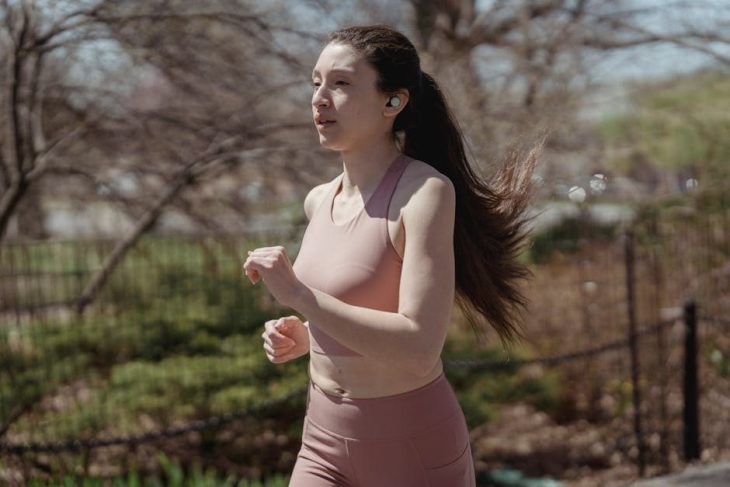
Workout earbuds have to do something most regular earbuds don’t: stay put while you’re sweating, jumping, and moving aggressively. That changes everything about what you should look for. This guide breaks down the seven factors that actually matter when buying wireless earbuds for the gym, running, or any high-movement activity.
Reviews Universe is reader-supported. When you buy through links on our site, we may earn an affiliate commission at no extra cost to you.
In a Hurry?
Check our Best Wireless Earbuds for Working Out 2026 roundup for our top tested picks. Otherwise, keep reading to learn what actually matters when you’re shopping.
Factor 1: Secure Fit Style

The number one reason workout earbuds fail is fit. If they fall out when you bend over or shake your head during burpees, the best sound in the world does not matter. There are three dominant fit styles for workout earbuds, and each suits a different activity profile.
Ear Hooks (Over-Ear Loops)
Rigid or semi-flexible hooks that loop over the top of your ear. This is the most secure style and the gold standard for running, HIIT, plyometrics, and anything with vertical impact. Popular with Powerbeats and Beats Fit Pro designs. Downside: hooks can interfere with sunglasses and hats.
Ear Wings (Fins)
Small silicone wings that tuck into the ridge of your ear (the antihelix). More discreet than hooks, with similar retention for most activities. Found on JBL Endurance Peak, Sony WF-SP800N, and many Jabra models. Less secure than hooks for extreme impact but sufficient for most gym work.
In-Ear Silicone Tips (No Hook/Wing)
Standard earbud design with a good seal from the correct tip size. Works for walking, cycling, lifting, and light cardio. Less reliable for heavy running or burpees — one wrong movement and they pop out. AirPods Pro and most premium non-sport earbuds fall here.
Our recommendation: If you run or do HIIT, prioritize ear hooks or wings. If you primarily lift or do steady cardio, in-ear with good tips is fine.
Factor 2: Water Resistance Rating (IP Ratings)

IP (Ingress Protection) ratings tell you exactly how much water and dust an earbud can handle. Do not buy workout earbuds without a published IP rating — “water resistant” without a number is marketing fluff.
IPX4 — The Minimum
Protection against splashes from any direction. This is enough for normal gym sweat and light rain. Every serious workout earbud on the market in 2026 meets at least IPX4. Below this, the earbud is not a workout earbud.
IPX5
Protection against low-pressure water jets. Handles heavy sweat and moderate rain without issue. A noticeable step up from IPX4 for outdoor runners.
IPX7 — The Sweet Spot
Submersible up to 1 meter for 30 minutes. Survives being dropped in a puddle, heavy rain, a rinse under the tap, and any amount of sweat. This is the ideal rating for serious workout use.
IP68 — The Overkill
Dust-tight plus submersion beyond 1 meter. Rare in earbuds and usually unnecessary unless you are doing watersports (swim earbuds are a specialized category).
Our recommendation: IPX4 is the floor. If you are choosing between IPX4 and IPX7 models at a similar price, always take IPX7. You will sweat more than you think.
Factor 3: Transparency Mode (Awareness)

Transparency mode (sometimes called Awareness, Ambient, or Hear-Through) uses the earbud’s microphones to pipe in outside sound. For outdoor workouts, this is more important than active noise cancellation. A good transparency mode lets you hear cars, bikes, and voices without pausing your music.
This matters for safety. Wearing ANC earbuds while running on city streets is genuinely dangerous — you cannot hear traffic, cyclists, or warning shouts. Transparency mode solves this, letting you stay situationally aware while still enjoying audio.
What Makes a Good Transparency Mode
- Natural sound: Voices and ambient noise should sound realistic, not compressed or tinny. AirPods Pro 2 and Bose QC Ultra set the bar here.
- Low hiss: Cheaper earbuds add noticeable microphone hiss in quiet environments.
- Wind noise rejection: Critical for outdoor runners. Apple, Sony, and Bose have the best wind algorithms; budget earbuds often struggle.
- Quick toggling: A long-press gesture or dedicated button to swap between ANC and transparency without fumbling your phone.
Our recommendation: If you workout outdoors — running, cycling, urban walking — prioritize transparency mode quality over ANC performance. For pure gym use, either is fine.
Factor 4: Battery Life for Workouts
Most people overthink battery life. You do not need 12 hours of continuous playback in a single earbud for workouts — you need enough for your longest training session with some buffer.
How Much Battery Do You Actually Need
- Gym users (45-75 minute sessions): 5+ hours per charge is plenty. The earbuds will live in their case the rest of the day.
- Runners and cyclists (90-120 minute sessions): 7+ hours per charge gives comfortable headroom for longer training blocks, half-marathons, and recovery runs.
- Ultra-endurance (3+ hour sessions): Look for 9+ hours per charge. Even then, many runners carry the case to top up between segments.
Fast Charging Is the Hidden Hero
Fast charging matters more than total capacity for most users. A workout earbud that gives you 1 hour of playback from a 10-minute charge in the case means you can top up while changing clothes and never miss a session. Look for quick-charge specs in the product listing.
Battery Degradation
Lithium-ion batteries in wireless earbuds typically degrade 20-30% after 2 years of daily use. Models with replaceable batteries (Fairphone Fairbuds, some Shokz) mitigate this. Most earbuds, including AirPods and Galaxy Buds, are effectively disposable at the 2-3 year mark.
Our recommendation: 7+ hours per charge with 10-minute fast charging covers 95% of workout scenarios without paying for battery you will not use.
Factor 5: Open-Ear vs In-Ear Design

Open-ear earbuds (and bone conduction headphones) do not seal your ear canal. Instead, they rest just outside your ear or in front of the canal, leaving it open to the environment. This is a fundamentally different experience from traditional in-ear buds, with real tradeoffs.
Open-Ear Pros
- Full environmental awareness — safer for outdoor runners and cyclists
- More hygienic (no sweat trapped in the ear canal)
- Comfortable for users with ear-canal sensitivity or infections
- Easy to have conversations without removing them
- No pressure changes when you move your jaw
Open-Ear Cons
- Significantly weaker bass response (no canal seal)
- Leaks audio to people near you (you will annoy gym neighbors)
- Struggles in loud environments (louder gyms drown the music)
- Generally poorer call quality
- Usually a slight weight increase from hook/headband designs
Who Should Buy Open-Ear
Outdoor runners in traffic, cyclists on open roads, anyone with ear-canal sensitivity, and users who value being able to have quick conversations without fumbling. Shokz OpenRun and OpenFit dominate this category. The tradeoff on bass and isolation is real, but the safety and comfort gains are meaningful.
Our recommendation: Try open-ear if you primarily work out outdoors and want total awareness. Stick with in-ear if you want the best sound quality and work out indoors.
Factor 6: Sweat Resistance vs Water Resistance

Here is something most people miss: sweat is not the same as water. Sweat is acidic, salty, and contains oils and skin bacteria. Over time, it corrodes components that pure water does not.
An earbud rated IPX7 (submersible in fresh water) is not automatically sweat-proof for years of use. Extended sweat exposure can still degrade internal contacts, speaker diaphragms, and battery terminals. This is why many earbuds that survive pool dips die from daily gym sessions.
What to Look For
- “Sweat-proof” rating (not just IPX): Some manufacturers certify specifically against sweat. Jabra, JBL, and Beats often specify this.
- Nano-coating: A hydrophobic coating on internal components (marketed as “P2i,” “Liquipel,” or “nano-coating”) extends lifespan significantly.
- Sealed microphones: Mic holes are common failure points. Better earbuds use mesh or gasket-sealed mics.
- Warranty coverage: Check if sweat damage is excluded. Apple and Samsung often exclude “liquid damage” in their warranties.
Care Habits That Extend Life
Wipe earbuds down with a dry microfiber cloth after every workout — do not wait. Let them air-dry in the case open for 5 minutes before sealing. Once a month, clean the mesh speaker grilles with a soft brush. These simple habits can double the lifespan of workout earbuds.
Our recommendation: Look for IPX7 + a published sweat resistance claim or nano-coating. And clean them after every session.
Factor 7: Sound Quality vs Stability
For workout earbuds specifically, how well they fit matters more for sound than what codec they use or how expensive their drivers are. A $300 earbud with a poor seal sounds worse than a $80 earbud that fits properly.
Why Fit Beats Codec
In-ear earbuds rely on a tight seal with your ear canal to produce bass. Without a seal, low frequencies leak out — the earbuds sound thin, tinny, and treble-heavy. Getting the right silicone tip size (XS, S, M, L, XL) for each ear individually matters more than LDAC vs AAC vs aptX.
Workout-Tuned Audio
Most workout earbuds tune for bass-heavy sound profiles. This is intentional: energetic bass drives workout intensity, and gym environments are loud enough that subtle detail gets lost anyway. If you want “audiophile” flat response, workout earbuds are not the category for you.
Finding the Right Ear-Tip Size
- Try all included tip sizes on both ears (ears can be asymmetric).
- Bass should feel punchy, not thin. If bass sounds weak, tips are too small.
- If the earbud feels like it is falling out when you chew, tips are too big.
- Memory foam tips (Comply, SpinFit) often improve both seal and retention versus stock silicone.
Our recommendation: Prioritize fit and seal first, then worry about codec. Spend 10 minutes trying tip sizes before declaring a pair “bad sounding.”
Common Mistakes to Avoid
Buying ANC-Focused Earbuds for Outdoor Running
Noise-cancellation is great for airplanes and noisy offices. On a street, it is dangerous. You cannot hear traffic, cyclists, or warning shouts. Prioritize transparency mode quality for outdoor use, even if it means settling for weaker ANC.
Ignoring IP Ratings
“Splash resistant” without an IP number is marketing language, not a rating. If you cannot find an IPX rating in the spec sheet, assume the earbuds are not workout-appropriate. Do not trust brand claims without numbers.
Choosing Premium Audio Over Fit
A $350 pair of earbuds that do not stay in during burpees is worse than a $70 pair that do. Fit is load-bearing for the entire product category. Read fit-specific reviews, not just sound reviews.
Not Checking Ear-Tip Sizes
If a brand only includes S/M/L tips, users with small or unusual-shaped canals often struggle. Look for 4-5 tip size options minimum. Brands like Jabra, Bose, and Sony typically include the widest range.
Forgetting About Connection Stability
Bluetooth can skip during high-movement workouts if the signal has to pass through your body (phone in left pocket, earbud in right ear). Modern Bluetooth 5.3+ handles this better than 5.0. Check reviews specifically for “connection stability during exercise.”
Skipping the Companion App Review
The mobile app controls EQ, touch gestures, transparency/ANC settings, and firmware updates. Some brands have great hardware but awful apps (and vice versa). Read app store ratings before committing to a brand.
Frequently Asked Questions
Should I get earbuds with ANC for the gym?
Only if you exclusively work out indoors. ANC is useful for blocking gym music you do not like or background equipment noise. But for outdoor runners, ANC is a safety risk — you cannot hear traffic. Prioritize transparency mode instead. If you do both indoor and outdoor workouts, pick earbuds with good ANC and good transparency, and toggle between them.
IPX4 vs IPX7 — is the upgrade worth it?
Yes, if the price gap is less than $30. IPX4 handles sweat and light rain. IPX7 handles downpours, submersion, and heavy sweat without worry. For anyone serious about outdoor workouts or who sweats heavily, IPX7 pays for itself in longevity. If you only work out in a mild AC’d gym, IPX4 is sufficient.
Are open-ear earbuds good for working out?
For outdoor running and cycling: yes, they are excellent for safety and awareness. For indoor gyms with loud ambient noise: probably not — the loud gym drowns out your music. For lifting with light cardio: fine. The tradeoff is weaker bass and more sound leakage in exchange for situational awareness. Shokz OpenRun and OpenFit are the top-rated options.
How long should workout earbuds last?
Quality workout earbuds should last 2-3 years of regular use before battery degradation becomes significant. Sweat exposure is the main killer — wipe them down after every session and let them air-dry before putting them in the case. Models with replaceable batteries (Fairphone, some Shokz) can last longer but are rare in the workout category.
Can I use AirPods Pro at the gym?
Yes, cautiously. AirPods Pro 2 are IP54-rated, so they handle normal gym sweat. But they lack ear hooks or wings, so they can slip out during burpees, box jumps, or heavy running. If you primarily lift or do low-impact cardio, they are fine. For high-intensity training, dedicated workout earbuds with secure fit (Beats Fit Pro, Powerbeats Pro 2, or Shokz OpenFit) are more reliable.
Our Top Picks
Ready to shop? These are our tested recommendations based on the criteria above:
- Best Wireless Earbuds for Working Out 2026 — the full roundup of our top tested picks across every price point.
- Best Wireless Earbuds Under $50 — budget options that still meet the IPX4+ minimum for workouts.
- EarFun Air Pro 4 vs Anker Soundcore Space A40 — a head-to-head of two of the best value workout-capable earbuds.
Whichever direction you go, use the seven factors above to filter the options. Buy from a retailer with a good return policy, wear them for a week of real workouts, and if they do not fit or stay put, send them back. The right pair should feel invisible in the first 10 minutes of a session — if you are still adjusting them after that, keep shopping.