
The household robot everyone was promised — a humanoid that loads the dishwasher and folds laundry — does not exist and will not exist for years. What does exist, quietly and without much fanfare, is something arguably more useful: a growing set of single-purpose machines that each take one specific chore off your list permanently. Not a robot butler, but a robot that mows the lawn, a robot that scrubs the windows on the third floor, a robot that cleans the pool, and a robot that deals with the litter box so you never have to again. Every one of these is on Amazon today. Here is the best robot for each job in your house, and an honest assessment of which are worth owning.
Reviews Universe is reader-supported. When you buy through links on our site, we may earn an affiliate commission at no extra cost to you.
| Product | Price | Buy |
|---|---|---|
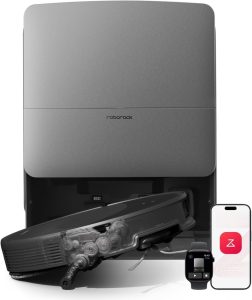 Roborock Saros 20 Floors |
$1,390 | Check Price |
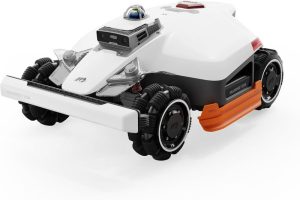 Mammotion Luba 3 AWD The Lawn |
$2,799 | Check Price |
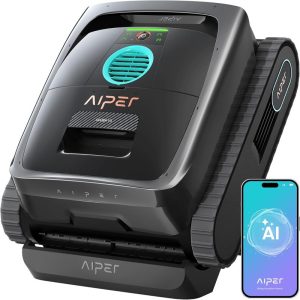 Aiper Scuba V3 The Pool |
$800 | Check Price |
 Ecovacs Winbot W3 Omni Windows |
$700 | Check Price |
 Litter-Robot 4 The Cat |
$699 | Check Price |
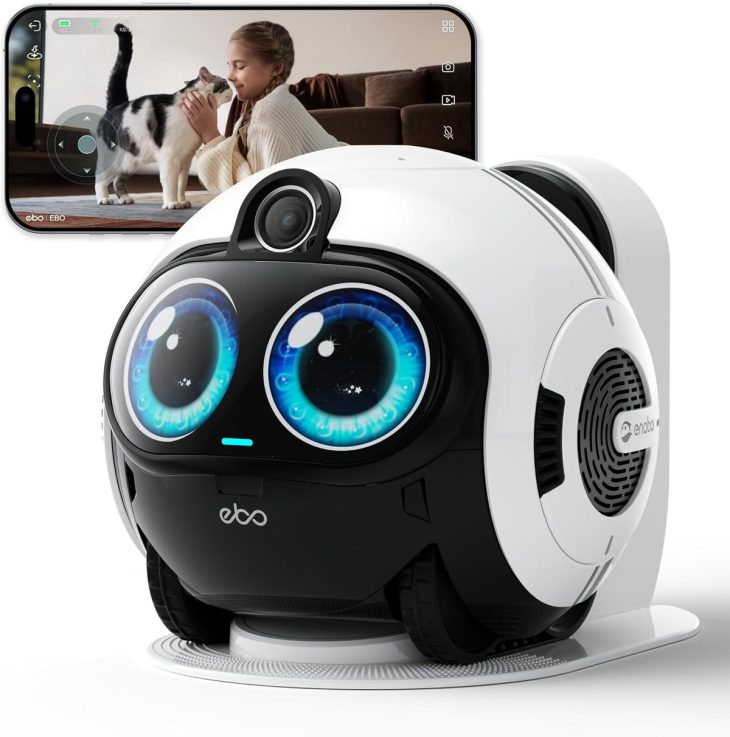
 Enabot EBO Max Checking In |
$570 | Check Price |
1. Roborock Saros 20 — Best Robot for Floors ($1,390)
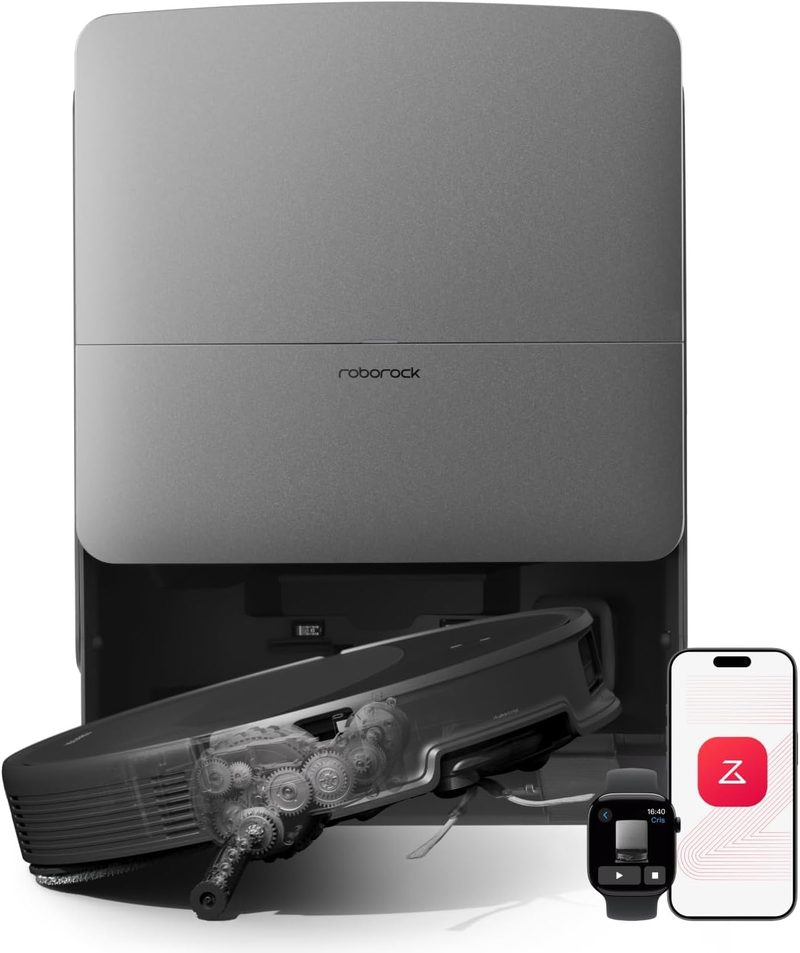
The robot vacuum is the household robot that actually succeeded, and the Saros 20 is the current high-water mark. It delivers 36,000 pascals of suction — among the highest available anywhere — and in independent deep-clean testing removed 89% of embedded sand from carpet and 88% of flattened pet hair, with a perfect score on coffee grounds.
The engineering that matters most is invisible in the specifications. Roborock deleted the spinning laser turret that sticks out of the top of most robot vacuums and replaced it with solid-state laser scanning, dropping the robot’s height to 79.8 millimetres. That is the difference between cleaning under your sofa and stopping at its edge. The AdaptiLift chassis then climbs double-layer thresholds up to 3.46 inches, which is what stops it becoming an expensive one-room cleaner in a house with raised door sills.
Mopping uses dual spinning pads with adaptive pressure, and the dock washes them at 212 degrees Fahrenheit — boiling point — before drying them with hot air. It recognizes over 300 obstacle types, so it routes around the phone charger instead of eating it.
If $1,390 is more than you want to spend, the Roborock Qrevo 2 Pro at around $550 covers the fundamentals with 20,000 pascals and edge mopping. For the full breakdown against its closest rival, see our Roborock Saros 20 vs eufy Omni S2 comparison.
Pros
- 36,000 pascals of suction, among the highest available
- Only 79.8 mm tall — reaches under furniture others cannot
- Climbs 3.46 inch double-layer thresholds
- Mop pads washed at 212 degrees Fahrenheit and hot-air dried
- Recognizes over 300 obstacle types
- 89% embedded sand removal in independent testing
Cons
- $1,390 is deep into premium territory
- Spinning pad mop is less effective than a roller on dried stains
- No automatic detergent dispensing
- Overkill for a small single-level apartment
2. Mammotion Luba 3 AWD 3000H — Best Robot for the Lawn ($2,799)
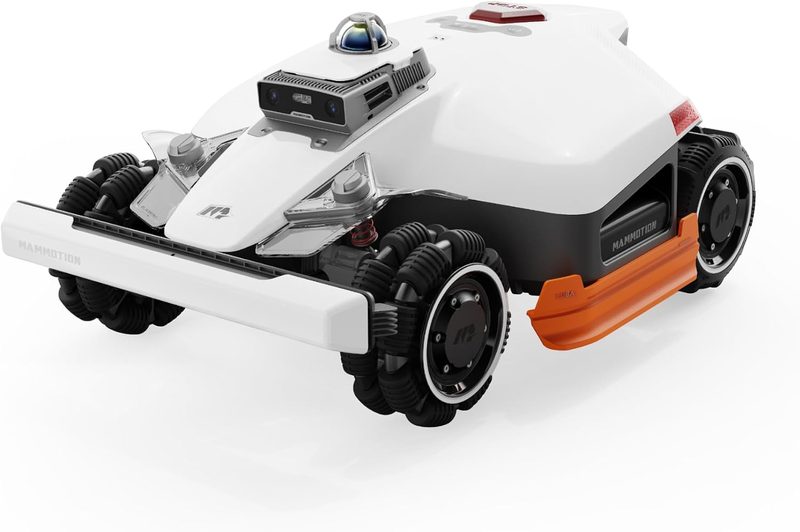
Robot mowers spent a decade being a bad idea — you buried a wire around your entire garden and the machine bumped around inside it. That era is over. The Luba 3 AWD needs no wire at all, and it navigates using three technologies at once: a 360-degree laser scanner with a 230-foot range, network-corrected satellite positioning, and dual-camera vision. Each covers the others’ weaknesses, so it keeps working under trees and beside buildings where satellite-only mowers drift and stall.
It is genuinely capable off-road. Four independent motors climb slopes up to 80% — 38.6 degrees, steep enough to be unpleasant to walk — and adaptive suspension steps over roots, curbs and thresholds up to 50 millimetres. Two 165-watt motors drive six-blade discs, with the vision system adjusting cutting speed and power to grass density automatically. It covers up to 0.75 acres across 30 separately managed zones, running up to 175 minutes per charge.
This is the most expensive robot on the list and the one that saves the most labour. A weekly lawn service runs into four figures a season, so the payback period is measured in years rather than decades.
For a small garden, the Segway Navimow i105N at around $669 handles an eighth of an acre wire-free. We compared five models in our best robot lawn mowers guide.
Pros
- Laser scanning, satellite positioning and camera vision working together
- Climbs 80% (38.6 degree) slopes on four independent motors
- 230 foot laser range and 300+ recognized obstacle types
- Steps over obstacles up to 50 millimetres
- Covers 0.75 acres across 30 zones, 175 minutes per charge
- No boundary wire to bury
Cons
- $2,799 is the most expensive robot here
- Limited to 0.75 acres
- Garage sold separately
- Multi-sensor complexity means more that can eventually fail
3. Aiper Scuba V3 — Best Robot for the Pool ($800)
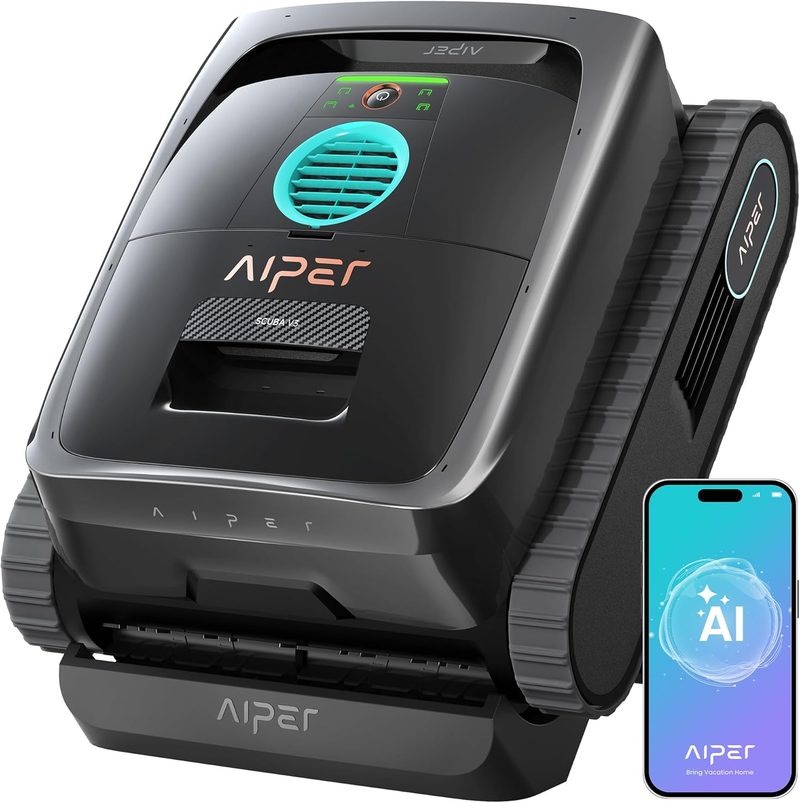
Pool cleaning is the chore most obviously suited to a robot, and the Scuba V3 is the most intelligent one currently sold. Rather than following a fixed pattern and hoping, it uses a front-facing camera that identifies over 20 debris types and drives straight to them. Aiper claims this makes it up to ten times faster than pattern-based cleaning, and the underlying logic is sound: most of a conventional pool robot’s runtime is spent covering clean water.
Its Navium mode is the closest thing here to genuine autonomy. It builds its own weekly cleaning schedule by analysing pool size, weather, and its own cleaning history, then runs without you touching it. Filtration is a dual-layer system pairing a 180-micron debris filter with a 3-micron ultra-fine layer that catches sand and particles you cannot see.
Two practical details separate it from older pool robots. It parks itself at the waterline when finished and notifies your phone, so you are not fishing a heavy machine off the pool floor with a pole. And at 8.2 kilograms it is light enough to lift out one-handed. Charging is a wireless dock with no exposed connectors to corrode — a sensible choice for a device that lives wet.
Aiper is also TÜV certified for data privacy, processing all visual information on the device with nothing uploaded, which is worth noting for a camera that looks at your garden.
The Aiper Scuba S1 at around $530 drops the camera navigation but adds a 270-minute runtime and a two-year warranty.
Pros
- Camera identifies 20+ debris types and drives directly to them
- Navium mode builds its own weekly schedule from pool size and weather
- Dual filtration down to 3 microns catches sand and fine particles
- Parks at the waterline and notifies you — no fishing it out with a pole
- Only 8.2 kg, easy to lift out one-handed
- Wireless charging dock with no corrodible connectors
- TÜV certified data privacy, processed on-device
Cons
- $800 is a lot unless you use the pool heavily
- Camera navigation depends on reasonable water clarity
- Seasonal use in most climates
- Filters need regular rinsing to maintain performance
4. Ecovacs Winbot W3 Omni — Best Robot for Windows ($700)
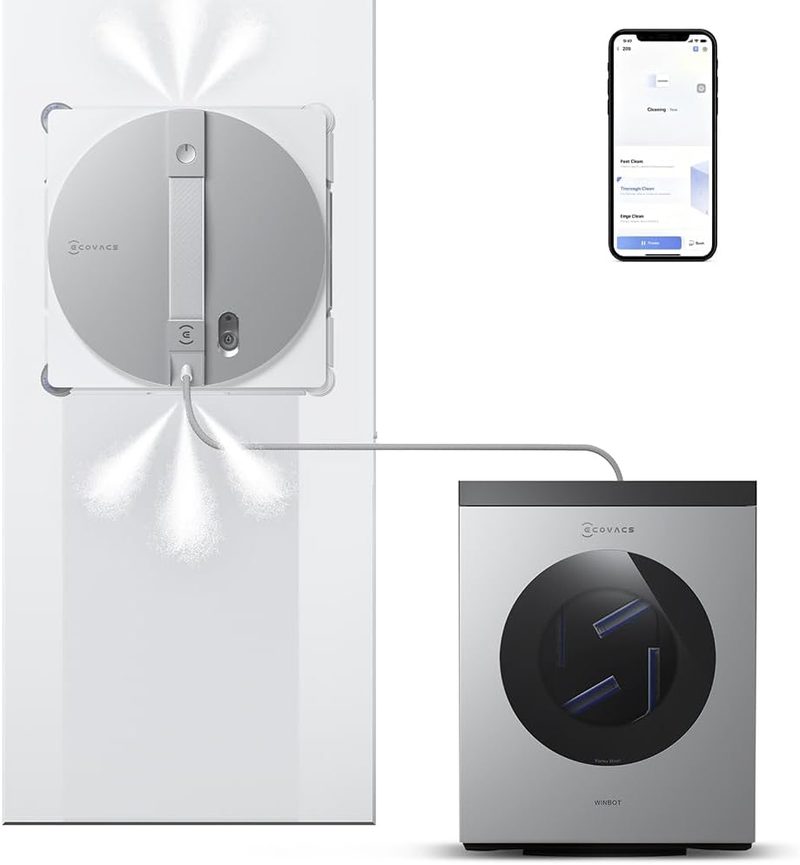
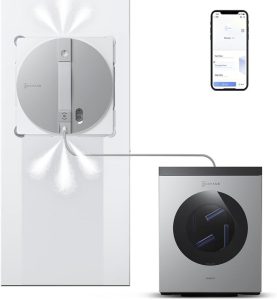
Window cleaning is the chore on this list that is not merely tedious but genuinely dangerous, and that is the real argument for the Winbot W3 Omni. It suctions itself to the glass and cleans exterior windows on upper floors while you stand safely inside. Nobody on a ladder, nobody leaning out of a third-storey window.
What makes the W3 the one to buy rather than earlier window robots is the station. Previous models left you rinsing filthy mop pads by hand, which removed much of the point. The W3’s multi-functional station washes the pads automatically using 16 high-pressure nozzles in about a minute, so the robot goes back to the glass with a clean pad instead of smearing dirt around.
Navigation is Win-SLAM 5.0 with dynamic obstacle avoidance at 1 millimetre precision, and TruEdge technology actively lowers a scrubber along the edges, cleaning into corners at 200 revolutions per minute — the part of a window everyone does badly by hand. A triple-nozzle wide-angle spray system loosens dirt ahead of the wiping pad. There are Fast, Intensive and Zone cleaning modes for different window types.
Safety is a 12-level protection system with strong suction, an anti-fall system, and a physical safety tether. That tether matters: this is a machine you are attaching to the outside of a building above head height.
The Winbot W2 Pro Omni at around $399 is the cheaper option, running up to 110 minutes on battery or continuously plugged in, with the older Win-SLAM 4.0 navigation.
Pros
- Cleans exterior high-rise windows without anyone on a ladder
- Station washes the mop pads automatically with 16 nozzles in about a minute
- TruEdge scrubber cleans into corners at 200 revolutions per minute
- Win-SLAM 5.0 navigation with 1 mm obstacle precision
- Triple-nozzle spray system loosens dirt ahead of the pad
- 12-level protection with anti-fall system and safety tether
- Handles floor-to-ceiling, frameless and tilting windows
Cons
- $700 for a machine most people use a few times a year
- Needs a power source near the window
- Cannot clean windows it cannot reach or attach to
- Audible while working
5. Litter-Robot 4 — Best Robot for the Cat ($699)
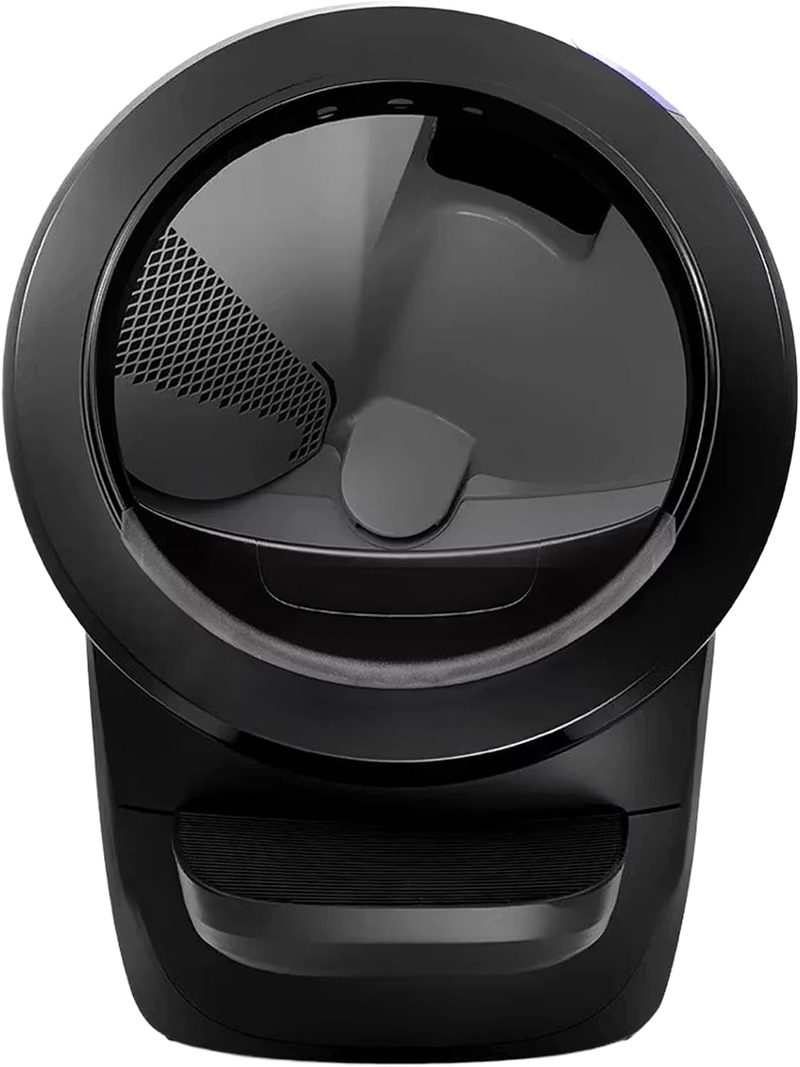
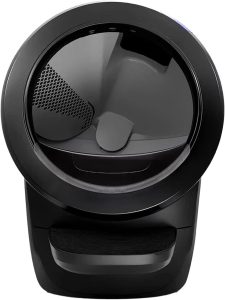
The Litter-Robot 4 removes a daily chore permanently. After your cat leaves, the globe rotates, a patented sifting process separates clumped waste from clean litter and drops it into a sealed drawer, and the clean litter returns to the bed. You empty the drawer every week or two. That is the entire job.
Rotation and gravity are why this design outlasted its competitors — rake-based automatic boxes drag a comb through litter and jam on clumps that are too soft or too firm.
The feature that justifies the price, though, has nothing to do with scooping. The unit weighs your cat after every single use and logs how often each one visits. Cats conceal illness instinctively, and two of the earliest measurable signs of serious feline conditions are changes in litter box frequency and gradual weight loss. Increased urination is an early marker of diabetes, hyperthyroidism and kidney disease; repeated short visits can indicate a urinary blockage, which is an emergency in male cats. In a multi-cat household, where nobody can tell which cat did what, this is information you genuinely cannot get any other way.
It supports up to four cats, each needing to weigh at least 3 pounds for automatic mode. One firm requirement: it must not touch any wall or be pushed into a corner, so it needs real open floor space. Read our full Litter-Robot 4 review for the detail.
Pros
- Eliminates daily scooping entirely
- Rotating sift is far more reliable than rake-based boxes
- Weighs each cat after every use, flagging gradual weight loss
- Tracks visit frequency, an early sign of urinary and kidney problems
- Sealed waste drawer and carbon filters cut odour substantially
- Supports up to 4 cats, with a 90-day return window
Cons
- $699 for a litter box
- Large, and cannot touch any wall
- One-year standard warranty is thin at this price
- Requires clumping litter
- Some cats take weeks to accept it, a few never do
6. Enabot EBO Max — Best Robot for Checking In ($570)
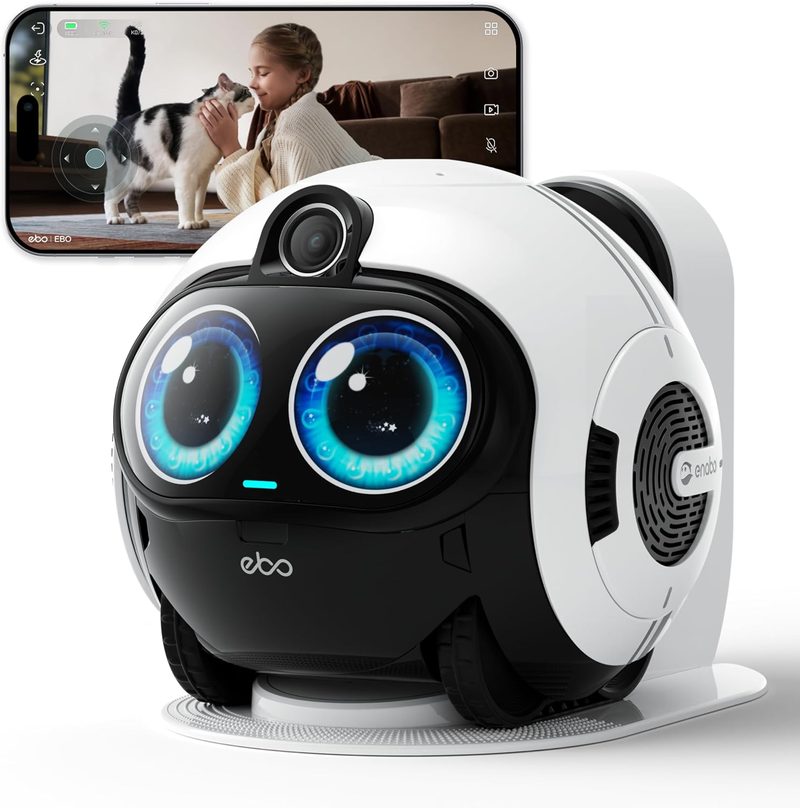
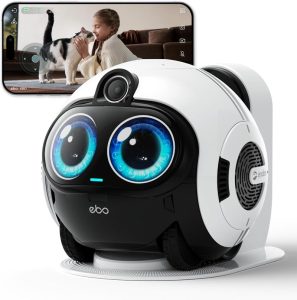
The EBO Max is the one robot here that does not do a chore, and it is the most interesting of the group. It is a mobile camera — a security camera that drives itself around your house instead of staring at one corner of one room from a shelf.
That mobility is the entire point. A fixed camera shows you one angle of one space. The EBO Max uses V-SLAM mapping to navigate room to room, so when you want to know whether the dog is on the sofa or whether you left the stove on, you drive over and look. It shoots 4K with night vision, handles two-way video calls, and returns to its dock to recharge on its own. You can set patrol routes and scheduled cruises to check specific areas.
Enabot markets it as an embodied artificial intelligence companion with facial recognition and long-term memory that learns your home’s layout and recognizes family members. Treat the companion framing with some scepticism — this is a camera on wheels with a chat interface, not a relationship. But as a practical tool for checking on pets, elderly relatives, or an empty house, a camera that can go and look is meaningfully more useful than one that cannot.
The obvious caution applies to any always-on mobile camera in your home: understand what it records, where that goes, and who can access it before you put one in a bedroom or a living room.
If the appeal is companionship rather than monitoring, the Loona robot pet at around $499 recognizes faces and gestures, plays fetch, chases a laser pointer, and doubles as a home monitor.
Pros
- Drives room to room instead of watching one fixed angle
- 4K video with night vision
- Two-way video calls for checking on family or pets
- V-SLAM whole-home navigation with custom patrol routes
- Returns to its dock and recharges automatically
- Facial recognition and long-term memory of your home’s layout
- 32GB card included in the box
Cons
- Does not actually do any household chore
- A mobile always-on camera raises real privacy questions
- The AI companion framing oversells what it is
- Cannot climb stairs, so one per floor
- $570 is more than several very good fixed security cameras
Side-by-Side Comparison
| Saros 20 | Luba 3 AWD | Scuba V3 | Winbot W3 | Litter-Robot 4 | EBO Max | |
|---|---|---|---|---|---|---|
| Price | $1,390 | $2,799 | $800 | $700 | $699 | $570 |
| Job | Vacuum and mop floors | Mow the lawn | Clean the pool | Clean windows | Clean the litter box | Mobile home camera |
| Navigation | Solid-state laser | Laser + satellite + vision | AI camera | Win-SLAM 5.0 | Sensors | V-SLAM |
| Autonomy | Self-emptying dock | Returns to charge | Self-scheduling | Self-washing station | Self-sifting | Auto-recharge |
| Human input needed | Empty dust bag | Empty grass rarely | Rinse filters | Refill water | Empty drawer weekly | None |
| App control | Yes | Yes | Yes | Yes | Yes | Yes |
| Works indoors | Yes | No | No | Yes | Yes | Yes |
| Saves you | A weekly chore | A weekly chore in season | A weekly chore in season | A dangerous chore | A daily chore | Peace of mind |
How to Choose a Household Robot
Buy for the Chore You Actually Hate
The single best predictor of whether a household robot earns its price is how much you dislike the job it replaces. A robot vacuum bought by someone who does not mind vacuuming ends up in a cupboard. A robot mower bought by someone who resents every Sunday afternoon spent mowing gets used every week for a decade. Be honest about which chores genuinely annoy you rather than which robot is most impressive.
Frequency Beats Novelty
Rank candidates by how often the chore recurs. The litter box is daily. Floors are weekly. The lawn is weekly in season. Windows are a few times a year. That ordering is roughly the order of value per dollar, which is why the Litter-Robot at $699 can be better value than the window robot at $700 despite costing the same — one saves you 365 chores a year and the other saves you three.
Check What the Robot Still Needs From You
No household robot is fully autonomous. The Saros 20 empties itself into a dock but you still empty the dock. The Litter-Robot sifts but you still empty the drawer. The Winbot washes its own pads but you still refill water and carry it between windows. The Scuba V3 comes closest to genuine autonomy with self-scheduling, but you still rinse the filters. Read what remains yours before assuming a chore disappears completely.
Measure Before You Buy
Physical constraints kill more of these purchases than any specification. The Litter-Robot cannot touch a wall. Robot vacuums need clearance under furniture — the Saros 20’s 79.8 millimetre height exists precisely because most cannot fit. Robot mowers need to cross the thresholds between your lawn areas. Get a tape measure out before you order.
Cameras in the House Deserve a Thought
Several of these robots have cameras, and two of them drive around your home with one. That is a genuine privacy consideration rather than a theoretical one. Aiper states the Scuba V3 processes visual data on-device with nothing uploaded, and is TÜV certified for it. For any mobile indoor camera, find out what is recorded, where it is stored, and who can reach it before you put it in a living space.
Expect Consumables
The purchase price is not the whole cost. Robot vacuums need filters, brushes and mop pads. The Litter-Robot needs carbon filters and clumping litter. Pool robots need filter replacements. Mowers need blades. None of these are large costs individually, but budget for them over a decade of ownership rather than being surprised.
Frequently Asked Questions
What household robots can you actually buy in 2026?
Single-purpose robots, and they work well. You can buy a robot that vacuums and mops floors, one that mows the lawn without a boundary wire, one that cleans the pool, one that cleans exterior windows, one that cleans the cat’s litter box, and mobile cameras that drive around your home. What you cannot buy is a general-purpose humanoid that loads the dishwasher or folds laundry — that remains years away regardless of what demonstration videos suggest.
Which household robot is the best value?
Rank by how often the chore recurs. The Litter-Robot 4 handles a daily job, which makes $699 easier to justify than the same money spent on a window robot used three times a year. A robot vacuum handles a weekly chore indoors year-round. A robot mower handles a weekly chore but only in season, though it replaces a lawn service that can cost four figures a season, so the payback can still be fast.
Are robot window cleaners safe for high-rise windows?
The good ones are designed specifically for it. The Ecovacs Winbot W3 Omni uses a 12-level protection system combining strong suction, an anti-fall system, and a physical safety tether that anchors the robot independently of its suction. The genuine safety argument is comparative: a robot on the glass is considerably safer than a person on a ladder or leaning out of an upper-floor window, which is how window cleaning accidents actually happen.
Do household robots need Wi-Fi to work?
Most will perform their basic function without it, but you lose scheduling, app control, mapping and notifications — which is a large part of what you paid for. A robot vacuum will still clean on a button press and a robot mower will still cut, but zone management, remote start and status alerts all depend on a connection. Check coverage where the robot operates, particularly for outdoor machines at the far end of a garden.
Are robot vacuums and mowers actually worth the money?
It depends on the specific chore and your circumstances. Robot vacuums are the most broadly worthwhile because floors need cleaning year-round indoors. Robot mowers make strong financial sense if you currently pay for lawn care, since a weekly service runs into four figures a season. Pool and window robots are more situational — excellent if you have a pool you use constantly or a house full of glass you cannot safely reach, and hard to justify otherwise.
Can one robot do multiple household jobs?
Not yet, and this is the central limitation of the category in 2026. Each of these machines is engineered around one environment and one task — suction and mop pads for floors, cutting discs and slope-climbing for lawns, waterproofing and filtration for pools, glass suction and tethers for windows. A general-purpose robot capable of switching between them requires manipulation and reasoning capabilities that do not exist in consumer products. Buy for the specific chore you want gone.
The Verdict: Which Household Robot Should You Buy First?
Start with the Roborock Saros 20 if you are buying one household robot. Floors need cleaning every week, indoors, all year, in every home — which no other chore on this list can claim. At $1,390 it is the most capable robot vacuum sold, and its low 79.8 millimetre body and threshold climbing mean it actually cleans your whole home rather than one accessible room of it.
After that, buy for the chore that genuinely irritates you. The Litter-Robot 4 at $699 replaces a daily job and quietly monitors your cat’s health while doing it. The Mammotion Luba 3 AWD at $2,799 is the biggest labour saving here and pays back fastest if you currently hire someone. The Aiper Scuba V3 at $800 is the smartest robot on this list and close to genuinely autonomous. The Ecovacs Winbot W3 Omni at $700 is the one that removes a dangerous job rather than merely a boring one. And the Enabot EBO Max at $570 is worth it only if a camera that can go and look solves a problem you actually have.
The robot butler is not coming soon. Six robots that each do one job properly are already here, and collectively they remove more work from a week than any single humanoid realistically would.