
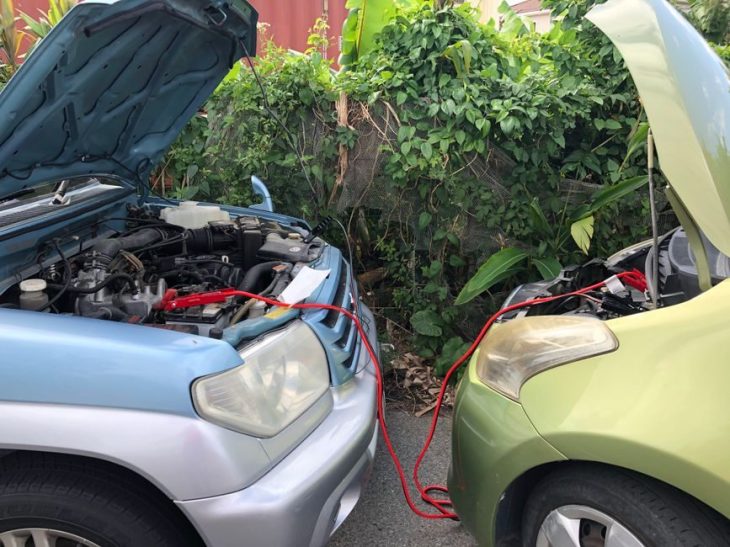
A jump starter is the rare purchase you hope never to justify. It sits in the trunk for three years doing nothing, and then one January morning in a car park with no other vehicles around, it is worth every cent you paid. NOCO makes the pair most people end up choosing between: the Boost GB150 at $299.95 with 3,000 amps, and the Boost X GBX155 at $369.95 with 4,250. Both start dead batteries without another car, both refuse to spark if you connect them backwards, and both double as power banks. The $70 between them buys more starting power than most drivers will ever need — and one feature that has nothing to do with cars at all.
Reviews Universe is reader-supported. When you buy through links on our site, we may earn an affiliate commission at no extra cost to you.
Quick Verdict
Winner for most drivers: the NOCO Boost GB150 at $299.95. 3,000 amps covers gas engines up to 9.0 litres, which is every passenger car, SUV and light truck on the road, and it adds an IP65 rugged rating the pricier model does not advertise.
Buy the GB150 for normal vehicles, at $70 less, in a compact 7.5-pound package built to survive a toolbox.
Buy the Boost X GBX155 if you run a large diesel, want it recharged in 2.7 hours instead of 7, or want 60-watt USB-C charging that will actually run a laptop.
GBX155 vs GB150: Specs Compared
| NOCO Boost X GBX155 | NOCO Boost GB150 | |
|---|---|---|
| Price | $369.95 | $299.95 |
| Peak amps | 4,250 | 3,000 |
| Gas engines up to | 10.0 litres | 9.0 litres |
| Diesel engines up to | 8.0 litres | 7.0 litres |
| Starts per charge (rated) | Up to 18 | Up to 80 |
| Safety system | UltraSafe 2.0 | UltraSafe |
| Spark-proof connection | Yes | Yes |
| Reverse polarity protection | Yes | Yes |
| Recharge time | 2.7 hours via USB-C Power Delivery | 7 hours |
| Emergency partial charge | 5 minutes for a jump start | Not specified |
| USB-C output | 60 watts Power Delivery, dual-direction | Power bank output |
| Built-in timer | 60-second timer conserves power | Not specified |
| Flashlight | 500 lumens, 7 modes with SOS and strobe | 500 lumens, 7 modes with SOS and strobe |
| Weather rating | Not specified | IP65 rugged housing |
| Weight | Not specified | 7.5 pounds |
| Warranty | 1 year | 1 year |
| In the box | Unit, clamps, USB-C cable, microfiber bag | Unit, clamps, USB-C cable, microfiber bag |
NOCO Boost X GBX155 — The Overpowered One ($369.95)
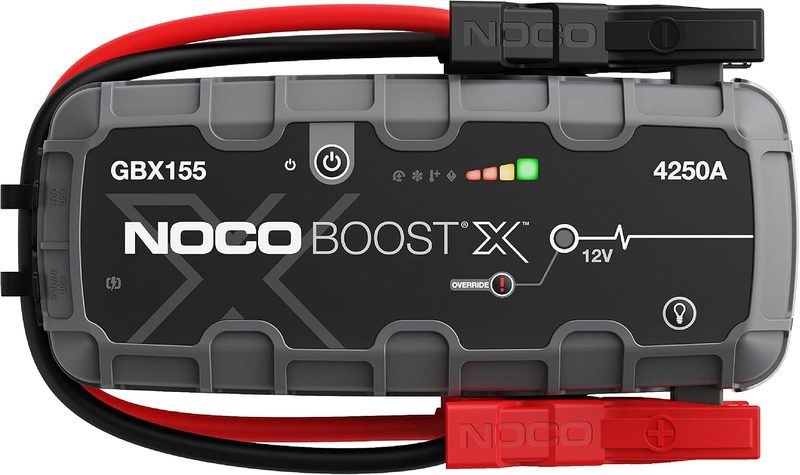
The Boost X GBX155 is rated at 4,250 amps and covers gas engines up to 10.0 litres and diesel engines up to 8.0 litres. To put that in context: a large pickup runs a 6.7-litre diesel and a big American V8 is around 6.2 litres. This unit is specified beyond nearly anything a private owner drives, which makes it a machine for heavy diesel trucks, agricultural equipment, and commercial fleets rather than for a family car.
The genuinely useful upgrade is charging speed. The GBX155 recharges in 2.7 hours over USB-C Power Delivery, and more importantly it can take on enough power for a jump start in just 5 minutes even from completely flat. That second figure matters more than it first appears. A jump starter’s real failure mode is not insufficient amps — it is being discovered dead in the trunk because nobody topped it up for a year. Being able to plug it into a laptop charger for five minutes and still rescue the car turns a dead jump starter from a disaster into an inconvenience.
UltraSafe 2.0 upgrades the spark-proof and reverse polarity protection with better thermal efficiency and power management. The underlying benefit is the same as the original system and it is the main reason to buy a modern lithium jump starter at all: connect the clamps to the wrong terminals and nothing happens. No sparks, no damage, no danger. Anyone who has jump started a car with traditional cables in the dark understands why this is worth paying for.
The 60-watt USB-C Power Delivery output is the feature with nothing to do with cars, and it is a real differentiator. 60 watts is enough to charge most laptops, not just phones and tablets, and dual-direction charging means the unit functions as a genuine high-output power bank. If you camp, work from vehicles, or want one device that covers both roadside emergencies and keeping a laptop alive, this alone may decide it.
A 60-second timer conserves power between attempts, contributing to a rating of up to 18 jump starts per charge at this higher energy level. The flashlight is a 500-lumen LED with 7 modes including SOS and strobe.
Pros
- 4,250 amps covers gas engines to 10.0 litres and diesel to 8.0 litres
- Recharges fully in 2.7 hours via USB-C Power Delivery
- Five minutes of charging from flat is enough for a jump start
- 60-watt USB-C Power Delivery will charge a laptop, not just phones
- Dual-direction charging makes it a genuine high-output power bank
- UltraSafe 2.0 with improved thermal and power management
- 500-lumen flashlight with 7 modes including SOS and strobe
- 60-second timer conserves power between attempts
Cons
- $70 more than the GB150 for power most drivers will never use
- Rated for up to 18 starts per charge against the GB150’s 80
- No IP weather rating advertised, unlike the GB150’s IP65
- Weight not specified, and higher-capacity units are heavier
- One-year warranty is modest for a $369.95 tool
NOCO Boost GB150 — The Right Amount of Power ($299.95)
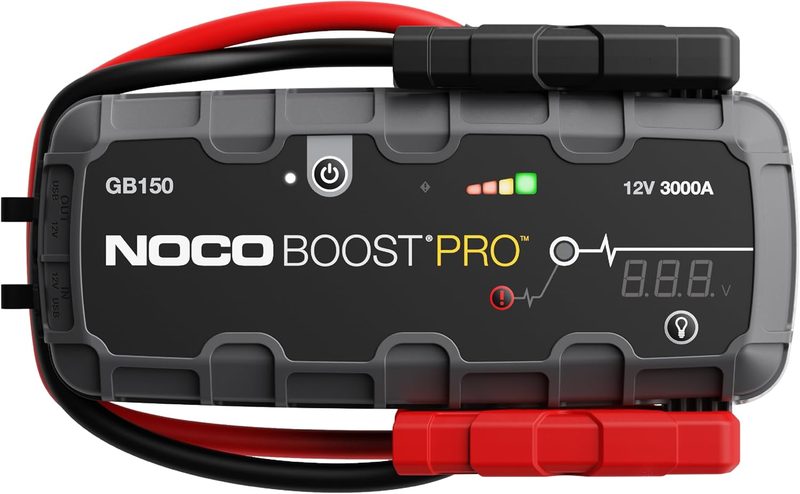
The GB150 delivers 3,000 amps, covering gas engines up to 9.0 litres and diesel up to 7.0 litres. That specification comfortably exceeds every passenger car, SUV and light truck sold, which is the single most important fact in this comparison. Unless you are starting a commercial diesel, the extra 1,250 amps on the GBX155 is headroom you will never touch.
Its standout number is endurance: up to 80 starts per charge on engines up to 9.0 litres. That figure is measured differently from the GBX155’s 18, which reflects a higher-energy start, but the practical implication is real — the GB150 is designed to be left in a vehicle and used repeatedly without constant recharging, which is exactly what a jump starter kept for emergencies needs to do.
UltraSafe delivers the patented spark-proof and reverse polarity protection that makes these units genuinely foolproof. NOCO’s description is blunt and accurate: no sparks, no wrong connections. For anyone helping a stranger in a dark car park, or working on their own car for the first time, this removes the part of jump starting that is actually dangerous.
The GB150 is also the more ruggedly specified of the two. It carries an IP65 rating with rubberized over-molding, protecting against water, dust and impact — a rating the GBX155’s listing does not advertise. For a tool that lives in a trunk through winters, gets dropped on gravel, and may be used in rain, that matters more than peak amperage. It weighs 7.5 pounds and is sized to fit a glove box or emergency kit.
It recharges in 7 hours, includes an integrated power bank for phones and tablets, and carries the same 500-lumen LED flashlight with 7 modes including SOS and strobe. High-conductivity clamps maximize energy transfer to the battery.
Pros
- $70 cheaper than the Boost X GBX155
- 3,000 amps covers every passenger car, SUV and light truck on the road
- Rated for up to 80 starts per charge
- IP65 rugged housing with rubberized over-molding resists water, dust and impact
- Compact 7.5 pounds, sized for a glove box or emergency kit
- UltraSafe spark-proof and reverse polarity protection
- High-conductivity clamps for maximum energy transfer
- 500-lumen flashlight with 7 modes including SOS and strobe
Cons
- 7 hours to recharge, against 2.7 for the GBX155
- No 5-minute emergency charge capability
- Power bank output is lower than the GBX155’s 60-watt USB-C
- Not enough for the largest commercial diesel engines
- One-year warranty
Head-to-Head: Do You Actually Need 4,250 Amps?
Starting Power: Almost Certainly Irrelevant
This is the specification the marketing leads with and the one least likely to affect you. The GB150’s 3,000 amps handles gas engines to 9.0 litres and diesel to 7.0. For scale, a large American V8 is roughly 6.2 litres and a heavy-duty pickup diesel is around 6.7. Both are inside the cheaper unit’s range with room spare. The GBX155’s extra capability is aimed at commercial diesel, agricultural machinery, and fleet use. If you are buying this for a car, the amp difference should not influence your decision.
Recharge Speed: A Real Advantage for the GBX155
2.7 hours against 7 is a meaningful gap, but the more important figure is the GBX155’s ability to take a usable jump-start charge in 5 minutes from completely flat. Jump starters fail in practice not because they are underpowered but because they are found dead when needed — self-discharge over a year in a trunk is the enemy. A device you can revive in five minutes from a laptop charger or a friend’s power bank is far more dependable in reality than one that needs seven hours of planning.
Durability: GB150
The GB150 explicitly carries an IP65 rating with rubberized over-molding against water, dust and impact. The GBX155’s listing does not advertise a weather rating. For a tool whose entire purpose is being used outdoors in bad conditions — because batteries die on cold wet mornings, not sunny afternoons — this is a more relevant specification than peak amperage.
As a Power Bank: GBX155
60-watt USB-C Power Delivery with dual-direction charging is a genuinely different capability, not a marginal upgrade. 60 watts will charge most laptops; a standard power bank output will not. If you camp, work out of a vehicle, or want a single device that covers a dead battery and a dead laptop, this is the strongest argument for spending the extra $70 — and it has nothing to do with cars.
Safety: A Tie, and Both Excellent
Both use NOCO’s UltraSafe spark-proof and reverse polarity protection; the GBX155 adds refinements to thermal and power management. In use, both mean the same thing: connect the clamps wrong and nothing happens. This is the feature that makes lithium jump starters safe for people who are not confident under the hood, and it is present on both.
Value: GB150
$299.95 for more starting capability than your vehicle requires, in a tougher IP65-rated housing, rated for more starts per charge. The GBX155 is the better device on paper and the wrong purchase for most people, because its advantages are concentrated in exactly the areas a private car owner does not need.
Frequently Asked Questions
Do I need a 4,250 amp jump starter for my car?
Almost certainly not. The 3,000 amp NOCO GB150 handles gas engines up to 9.0 litres and diesel up to 7.0, which covers every passenger car, SUV and light truck sold. For context, a large V8 is around 6.2 litres and a heavy-duty pickup diesel around 6.7. The 4,250 amp GBX155 is aimed at large commercial diesel engines, agricultural machinery and fleet use. Buying more amps than your engine needs delivers no benefit.
How does a lithium jump starter work without another car?
It contains a high-discharge lithium battery capable of delivering a very large current for a short burst — enough to turn a starter motor. You connect the clamps to your battery terminals exactly as you would jumper cables from another vehicle, but the power comes from the pack instead of a second car. Modern units like these add spark-proof and reverse polarity protection, so connecting the clamps incorrectly simply does nothing rather than causing sparks or damage.
What is reverse polarity protection and why does it matter?
It prevents anything happening if you attach the positive clamp to the negative terminal or vice versa. Without it, reversing the connection on a traditional jump start can produce sparks, damage vehicle electronics, and in the worst case cause a battery to vent or rupture. NOCO’s UltraSafe system on both of these units makes an incorrect connection inert, which is the single biggest safety advantage of a modern lithium jump starter over conventional jumper cables.
How often should I recharge a jump starter I keep in the car?
Every three to six months, even if unused, because lithium packs self-discharge slowly over time. This is the most common reason jump starters fail when needed — not lack of power, but being found flat. The GBX155 mitigates this well: it takes enough charge for a jump start in about 5 minutes from empty and fully recharges in 2.7 hours. The GB150 needs 7 hours for a full recharge, so it rewards a more disciplined schedule.
Can a NOCO jump starter charge a laptop?
The Boost X GBX155 can. Its 60-watt USB-C Power Delivery output is enough for most laptops, and dual-direction charging means it functions as a proper high-output power bank as well as a jump starter. The GB150 includes an integrated power bank for smartphones and tablets but at lower output, so it is not a reliable laptop charger. If that capability matters, it is the clearest reason to choose the GBX155.
Are jump starters safe to leave in a hot or freezing car?
Extreme temperatures are hard on any lithium battery and will reduce its lifespan and available capacity over time, particularly sustained heat. Both units are built for vehicle storage and the GB150 adds an IP65 rating with rubberized over-molding against water, dust and impact. Where practical, storing the unit in the cabin rather than an uninsulated trunk, and checking the charge every few months, will extend its life considerably.
Final Verdict: Which NOCO Should You Buy?
Buy the NOCO Boost GB150 at $299.95. For a private vehicle this is the correct choice. 3,000 amps starts anything you are likely to own with margin to spare, the IP65 rugged housing suits a tool that lives in a trunk and gets used in bad weather, it is rated for up to 80 starts per charge, and it saves $70. The UltraSafe protection that makes these units genuinely foolproof is identical to its more expensive sibling.
Buy the NOCO Boost X GBX155 at $369.95 for two specific reasons. If you run a large diesel beyond 7.0 litres, you need the extra capability. And if you want 60-watt USB-C Power Delivery that will charge a laptop, plus a 2.7-hour recharge and the ability to revive it enough for a jump in 5 minutes, those are genuine advantages — the fast-charging in particular addresses the way jump starters actually fail, which is by being flat when you reach for them.
Whichever you buy, set a reminder to top it up every three to six months. A jump starter that has been in the trunk for two years is not a jump starter.
Smaller options: the Boost X GBX75 ($249.95) delivers 2,500 amps, and the Boost GB70 ($199.95) offers 2,000 amps — both plenty for a typical four or six-cylinder car.