
DistroKid is the biggest name in independent music distribution, but it isn’t right for everyone. It has no free plan, many useful extras cost more per release, and if you stop paying the yearly fee your music is taken down from Spotify, Apple Music and every other store unless you’ve paid extra per release to keep it there. In 2026 it is also facing a lawsuit from Universal Music Group and an ownership change. The good news is that there are strong alternatives, including one that is completely free. We compared seven on price, royalties, speed and — the question most artists forget to ask — what happens to your music if you stop paying.
Reviews Universe is reader-supported. When you buy through links on our site, we may earn an affiliate commission at no extra cost to you.
Our Top Picks
| Product | Price | Buy |
|---|---|---|
RouteNote Best Free Alternative |
Free (you keep 85%) | Start Free |
CD Baby Best One-Time Payment |
$9.99/single, one time | Check Price |
Too Lost Cheapest Unlimited Plan |
$19.99/yr | Check Price |
Amuse Best for Fast Releases |
$23.99/yr | Check Price |
Ditto Music Best Budget Subscription |
From $14/yr | Check Price |
TuneCore Best for Publishing Admin |
$24.99/yr | Check Price |
LANDR Best for Producers |
$24/yr | Check Price |
Why Look for a DistroKid Alternative?
DistroKid’s Musician plan costs $24.99 a year for one artist, $44.99 for two and from $89.99 for labels, and it lets you keep 100% of your royalties. The catches: YouTube Content ID and TikTok/Instagram monetisation need the Social Media Pack ($4.95 per single or $14.95 per album each year, plus 20% of that revenue); a custom release date requires Musician Plus; and in DistroKid’s own words, “If you don’t renew your subscription to DistroKid, your music will be removed from services.” Keeping a release online after you cancel costs $29 per single or $49 per album through Leave a Legacy.
You don’t lose money you’ve already earned — DistroKid says you still receive earnings owed to you — and you can move your music elsewhere. But if you want a catalog that stays online without a yearly bill, or simply don’t want to pay before your music earns anything, one of the services below will suit you better, starting with RouteNote, which is free.
DistroKid Alternatives Compared
| Price | You keep | Stays live if you stop paying? | |
|---|---|---|---|
| RouteNote | Free, or Premium from $10/release | 85% (Free) / 100% (Premium) | Yes, free forever |
| CD Baby | $9.99 single, $14.99 album, once | 91% | Yes |
| Too Lost | $19.99/yr | 100% (85% if you stop) | Yes, at 85% |
| Amuse | $23.99/yr | 100% | Yes |
| Ditto Music | From $14/yr | 100% | Only with Release Protection |
| TuneCore | $24.99/yr | 100% (20% on social) | No |
| LANDR | $24/yr | 100% (85% if you stop) | Yes, at 85% |
| DistroKid | $24.99/yr | 100% | No, unless $29/$49 per release |
1. RouteNote — Best Free Alternative (Our Pick)
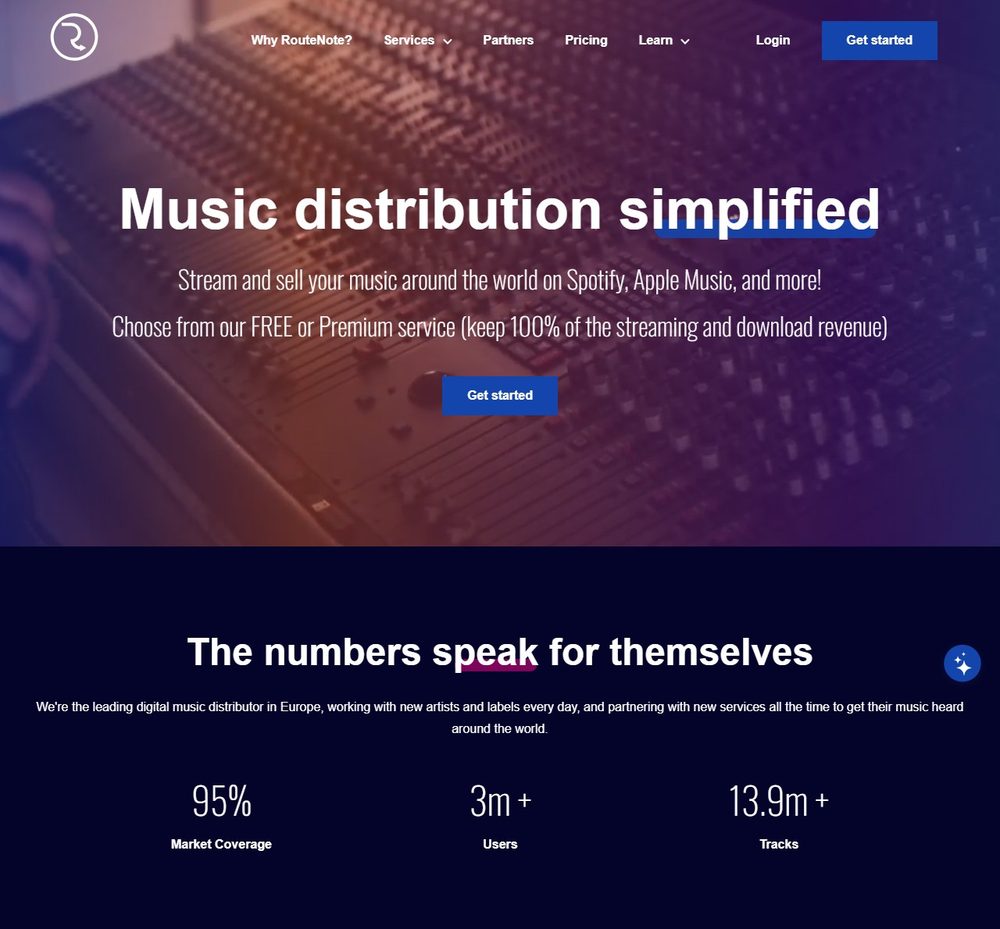
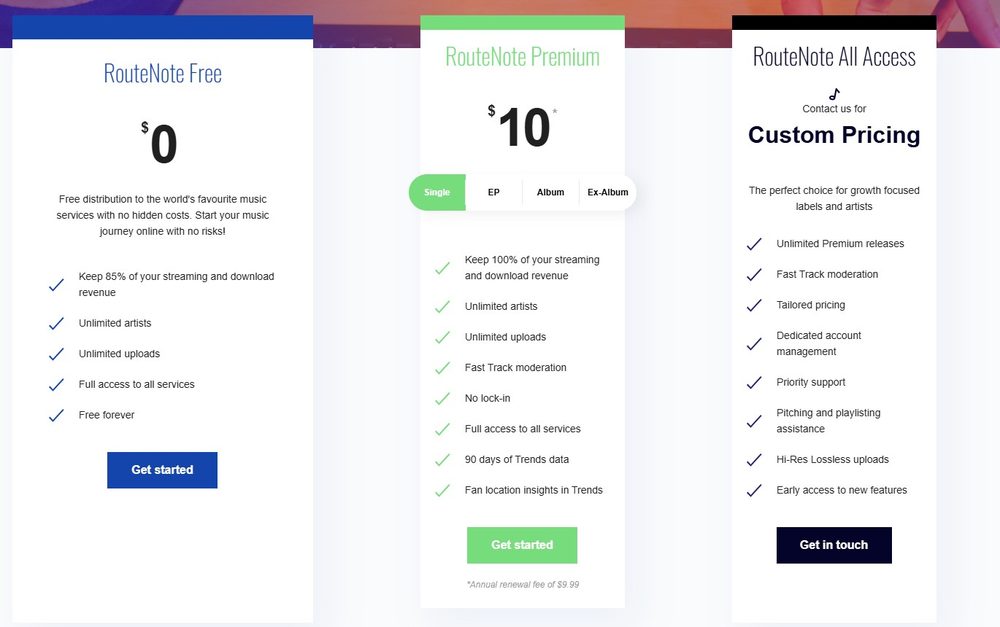
RouteNote is the DistroKid alternative we recommend to most artists, and one we’ve used ourselves. Its Free plan costs nothing to release music and nothing to keep it online: no subscription, no per-release fee and no renewal. In return RouteNote keeps 15% of your streaming and download revenue, and you get 85%. You can release unlimited music for unlimited artists to Spotify, Apple Music, Amazon Music, YouTube Music, TikTok, Instagram, Deezer, Tidal, Tencent and many more, and YouTube Content ID and SoundCloud monetisation are included free.
When a release starts earning real money, you can upgrade just that release to Premium — $10 for a single, $20 for an EP, $30 for an album, then $9.99 a year from the second year — to keep 100% and get Fast Track moderation. If you later stop paying, the release doesn’t disappear; it simply moves back to Free. That is the opposite of DistroKid’s model, and it means a song you release today can stay on Spotify for good without costing you anything.
Free comes with one real trade-off: patience. In October 2026 RouteNote’s moderation queue was 26-27 working days, followed by up to two weeks for stores to ingest the release, and support replies take around 8-10 working days. Upload six to eight weeks before your release date, or use Premium for releases on a deadline. RouteNote is a UK company based in Cornwall, founded in 2007, and says it serves more than three million users.
Pros
- Completely free, with no upfront or yearly fees
- Music stays live forever on Free
- Free YouTube Content ID and SoundCloud monetisation
- Upgrade any release to Premium to keep 100%
- Unlimited artists and releases
- No lock-in, free takedowns
Cons
- 15% commission on Free
- Long review queue on Free (5+ weeks in Oct 2026)
- Slow support replies
- $50 minimum payout
2. CD Baby — Best One-Time Payment
CD Baby, founded in 1998, charges once per release — $9.99 for a single, $14.99 for an album — and never again. There are no annual fees, so your music stays online without a subscription. In exchange CD Baby keeps 9% of streaming and download revenue and 30% of social video monetisation (YouTube, TikTok and Meta). Publishing and SoundExchange collection come with the $39.99 Boost add-on, and FastForward ($29.99) speeds up inspection, which otherwise takes 7-14 business days.
It’s a good fit if you release a few songs a year and like the idea of paying once. Note that CD Baby is now owned by Universal Music Group, through Virgin Music Group’s purchase of its parent Downtown in February 2026.
Pros
- Pay once per release, no annual fee
- Music stays online without a subscription
- Long track record
- Weekly payouts
Cons
- 9% cut of royalties, forever
- 30% of social video revenue
- Per-release fees add up for prolific artists
- Slow inspection without FastForward
3. Too Lost — Cheapest Unlimited Plan
Too Lost offers unlimited releases for one artist for $19.99 a year ($2.99 a month), or $35.99 a year for a label with unlimited artists. You keep 100% of royalties, and it delivers to 450+ stores. YouTube Content ID, Meta Rights Manager, splits, royalty advances and publishing administration are included rather than sold as add-ons.
Crucially, if you stop subscribing your releases stay in stores and you keep earning 85% of their royalties. Too Lost is a younger New York company (founded around 2019-2020) that raised a large investment round in 2026; its Trustpilot score is a middling 3.6.
Pros
- Cheapest unlimited annual plan
- Content ID and splits included
- Releases stay live if you stop paying (at 85%)
- Monthly billing option
Cons
- Younger company
- Mixed Trustpilot reviews
- Royalty share drops to 85% if you cancel
4. Amuse — Best for Fast Releases
Swedish distributor Amuse dropped its free tier in 2024, but its paid plans are competitive: Artist at $23.99 a year, Artist Plus at $39.99 and Professional at $59.99. All let you keep 100% of royalties (the Artist plan takes 15% of YouTube Content ID revenue) and promise release in 24 hours or less. It is mobile-first, offers royalty advances and adds features like hi-res audio and fan emails on higher tiers.
Amuse also says there are no extra payments to keep your music available, even if you cancel — a clear advantage over DistroKid at a similar price. Its Trustpilot rating is a strong 4.4.
Pros
- Fast releases
- Music stays live if you cancel
- Keep 100% of royalties
- Good mobile app and advances
Cons
- No free plan any more
- 15% Content ID fee on the Artist plan
- No publishing administration
5. Ditto Music — Best Budget Subscription
Liverpool-based Ditto Music works much like DistroKid — one yearly price, unlimited releases, 100% of streaming royalties — for less: Starter was $14 a year at the time of writing, Pro $39 and Labels $59. Ditto says releases reach Spotify in 1-3 days. Pro adds YouTube Content ID, exact release times, publishing royalty collection and sync pitching.
If you stop paying, Ditto doesn’t automatically remove your music, but releases are at risk of removal unless they have Release Protection, which is included on Pro and Labels. You also need an active subscription to withdraw royalties.
Pros
- Low annual price
- Fast delivery to Spotify
- Release Protection included on Pro
- Publishing and sync on Pro
Cons
- Starter lacks Content ID and exact release times
- Lapsed accounts can’t withdraw royalties
- Music at risk on Starter if you stop paying
6. TuneCore — Best for Publishing Admin
TuneCore is one of the oldest DIY distributors, owned by France’s Believe. Its Rising Artist plan costs $24.99 a year, Breakout Artist $44.99 and Professional $54.99, with unlimited releases to 150+ stores and 100% of streaming royalties; TuneCore takes 20% of earnings from TikTok, Facebook, Instagram and YouTube. Its separate publishing administration service is one of the most established for independent songwriters.
Like DistroKid, it is a rental model: if you cancel, your releases are removed the day your plan expires, and a failed renewal leads to takedown after 42 days. TuneCore also ended its free New Artist plan and free social distribution in 2025.
Pros
- Established brand
- Strong publishing administration
- Release scheduling on every plan
- Splits included
Cons
- Music taken down if you stop paying
- 20% fee on social platform revenue
- Policy changes in 2025
7. LANDR — Best for Producers
Montreal-based LANDR is best known for AI mastering, and its distribution plans start at $24 a year (Basic) or $45 (Pro), also included in its Studio bundles with mastering, plugins and samples. You keep 100% while subscribed, and LANDR takes 20% of Content ID revenue.
If you cancel, LANDR keeps your releases online and starts taking a 15% commission — so you keep earning without paying. For producers who would use the mastering and sample tools anyway, it’s good value.
Pros
- Bundles with mastering, plugins and samples
- Releases stay live if you cancel (at 85%)
- Keep 100% while subscribed
Cons
- 20% Content ID commission
- Custom release date needs Pro
- Pricing is less transparent
Other Options We Considered
UnitedMasters ended its free tier in October 2025; DEBUT+ costs $19.99 a year and releases are taken down if you lapse. Symphonic Starter ($29.99 a year) is a route into label services, but content is removed when your term ends after cancelling. Soundrop charges $4.99 per track plus 15% and bundles cover-song licensing, but has very poor reviews. Warner’s Level has shut down, and Stem is now application-only.
How to Choose
Do you want to pay anything up front? If not, RouteNote is the only major distributor here that is genuinely free. Your music is distributed and stays online at no cost; you just share 15% of what it earns.
Will your catalog stay online if you stop paying? RouteNote, CD Baby, Amuse, Too Lost and LANDR keep your releases live. DistroKid, TuneCore and Symphonic take them down, and Ditto Starter puts them at risk. If you release music to last, this matters more than a few dollars a year.
How much does your music earn? A 15% share costs less than a $24.99 subscription until your music earns about $167 a year. Below that, free is cheaper; above it, a flat-fee plan or RouteNote Premium on your best releases keeps more money in your pocket.
How fast do you need it? Subscription services such as DistroKid, Amuse and Ditto can have releases live within days. RouteNote Free needs more lead time; RouteNote Premium adds Fast Track moderation.
Frequently Asked Questions
What is the best free alternative to DistroKid?
RouteNote. Its Free plan costs nothing to release music or to keep it online, includes YouTube Content ID, and pays you 85% of revenue. You can upgrade individual releases to Premium (from $10) to keep 100%. Amuse and UnitedMasters no longer offer free tiers.
Which music distributors keep your music online if you stop paying?
RouteNote (free forever), CD Baby (one-time fees), Amuse, Too Lost (at 85%) and LANDR (at 85%) keep releases live. DistroKid, TuneCore, Symphonic and UnitedMasters remove releases when your subscription ends, and Ditto Starter releases are at risk without Release Protection.
Is RouteNote better than DistroKid?
For new and occasional releasers, yes: it is free and your music stays online without a yearly fee. DistroKid is faster and lets you keep 100%, so it suits artists who release often and earn more than about $167 a year.
What is the cheapest DistroKid alternative?
RouteNote Free costs nothing. Among paid unlimited plans, Ditto Music’s Starter (from $14 a year at the time of writing) and Too Lost ($19.99 a year) are cheaper than DistroKid’s $24.99 Musician plan.
Can I switch from DistroKid without losing streams?
Usually, yes. Download your files and ISRC codes from DistroKid’s Vault, upload the identical audio and metadata with the same ISRCs to the new distributor, wait for it to go live, then delete the release from DistroKid. Spotify normally keeps play counts for matching tracks, though no distributor guarantees it.
Is CD Baby better than DistroKid?
CD Baby suits artists with a few releases who prefer paying once ($9.99 per single, $14.99 per album) with no annual fee, in exchange for a 9% cut. DistroKid is cheaper for prolific artists and lets you keep 100%, but you must keep paying every year.
Final Verdict
RouteNote is the best DistroKid alternative for most independent artists. It’s free to use, your music stays online for good, Content ID is included, and you can upgrade individual releases to Premium when they earn enough. Just give its review queue plenty of time.
If you’d rather pay once, choose CD Baby. For the cheapest unlimited subscription, look at Too Lost or Ditto Music; for fast releases that stay up if you cancel, Amuse; for publishing administration, TuneCore; and for mastering and production tools, LANDR.
For a detailed head-to-head, read our DistroKid vs RouteNote comparison. Ready to release? Start with RouteNote Free — it costs nothing to try.