
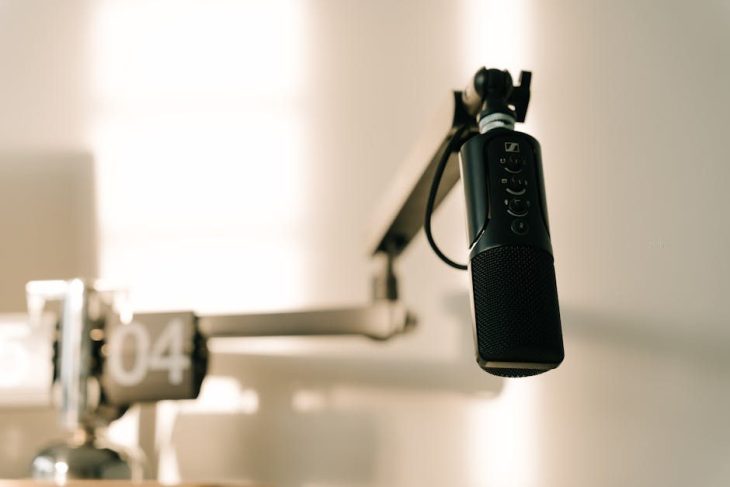
Podcasting in 2026 doesn’t require a $400 broadcast mic to sound professional. The USB microphone space under $150 has matured to the point where a $60 dynamic from Samson can rival audio quality that used to demand studio-grade XLR setups. We tested the best USB microphones across budgets and use cases — from no-fuss dynamics for noisy rooms to RGB-lit condensers built for Twitch streamers — to find the five worth your money this year.
Reviews Universe is reader-supported. When you buy through links on our site, we may earn an affiliate commission at no extra cost to you.
| Product | Price | Buy |
|---|---|---|
 Audio-Technica AT2020USB+ Best Overall |
$129 | Check Price |
 Samson Q2U Best Budget |
$60 | Check Price |
 Rode NT-USB Mini Best Premium |
$99 | Check Price |
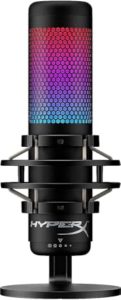 HyperX QuadCast S Best for Streaming |
$130 | Check Price |
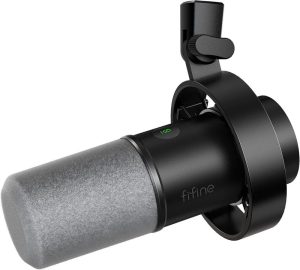 FIFINE K688 Best Portable |
$80 | Check Price |
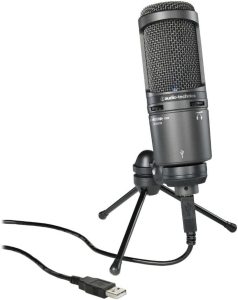
1. Audio-Technica AT2020USB+ — Best Overall ($129)
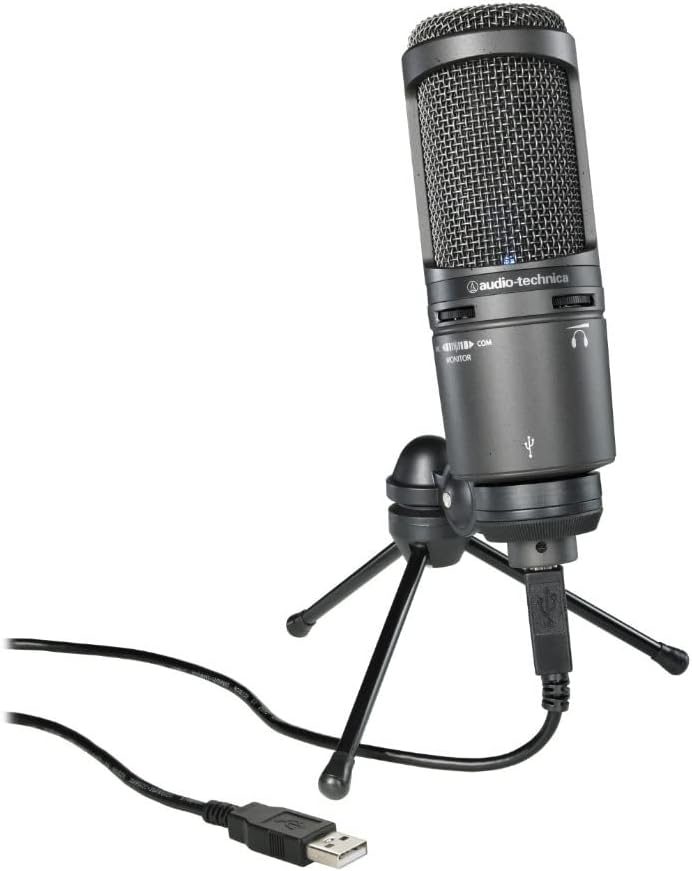
The Audio-Technica AT2020USB+ has been the default recommendation for serious podcasters on a budget for a decade, and at $129 it still earns the spot. It takes the legendary AT2020 studio condenser capsule — a mic that’s recorded countless professional vocals over the years — and bolts on a USB-A interface with a built-in headphone jack and mix control. The result is a plug-and-play workflow that produces audio indistinguishable from interface-driven setups.
What separates it from cheaper condensers is the cardioid pickup pattern paired with a flat frequency response. Your voice comes through with detail and presence but without the artificial warmth or harshness that plagues budget USB mics. The zero-latency headphone monitoring is genuinely useful — you hear yourself in real time as you record, which prevents the speech-delay disorientation that ruins takes on monitor-less mics.
The trade-off is that it’s a condenser, so it picks up room noise. If you record in an untreated bedroom with a noisy computer fan, you’ll hear it. For podcasters with a quiet recording space, though, the AT2020USB+ delivers studio-quality audio that punches well above its price — and Audio-Technica’s reliability means it’ll last a decade of daily use.
Pros
- Legendary AT2020 capsule with proven studio quality
- Built-in headphone jack with mix control
- Flat, accurate frequency response
- Solid all-metal build
- Plug-and-play with no drivers needed
Cons
- USB-A connection feels dated in 2026
- Condenser design picks up room noise
- No onboard gain knob
- Requires a quiet recording space
- No software DSP or effects
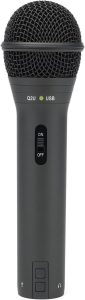
2. Samson Q2U — Best Budget ($60)
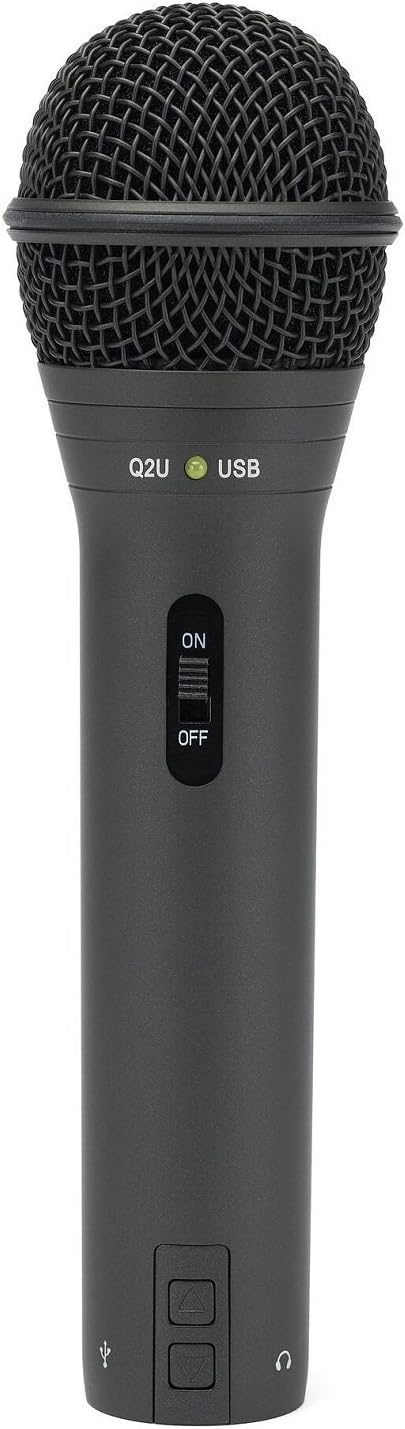
The Samson Q2U is the mic that single-handedly killed the “you need to spend $200+ for a real podcast mic” myth. At $60 you get a handheld dynamic mic with both USB and XLR outputs, a desktop tripod, windscreen, and cables — everything required to start recording the same day you unbox it. Podcasters from Joe Rogan’s early years to countless one-mic studios have proven this thing punches absurdly above its weight.
Because it’s a dynamic mic with a tight cardioid pattern, the Q2U rejects room noise far better than any condenser at this price. Keyboard clicks, HVAC hum, and street traffic largely disappear when you speak close to the capsule. The sound is warm, present, and broadcast-like — exactly the radio-voice texture most podcasters chase. It’s not as detailed as the AT2020USB+, but for dialogue it’s more flattering.
The dual USB/XLR output is the killer feature for evolving creators. Start with USB plugged into a laptop, and when you upgrade to an interface or mixer later, the same mic transitions to XLR with zero downside. That future-proofing alone justifies the price — you won’t outgrow this mic in two years.
Pros
- Dual USB and XLR outputs for future-proofing
- Dynamic capsule rejects room noise
- Complete starter bundle in the box
- Warm broadcast-style sound for dialogue
- Indestructible handheld build
Cons
- Older USB-A (mini-USB on the mic side)
- Lower output level than condensers (needs a Cloudlifter for XLR use)
- Desktop tripod is small and tippy
- No headphone monitoring on some bundles
- Less detail than condensers for music
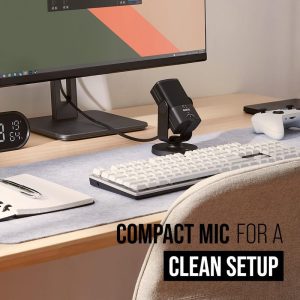
3. Rode NT-USB Mini — Best Premium ($99)
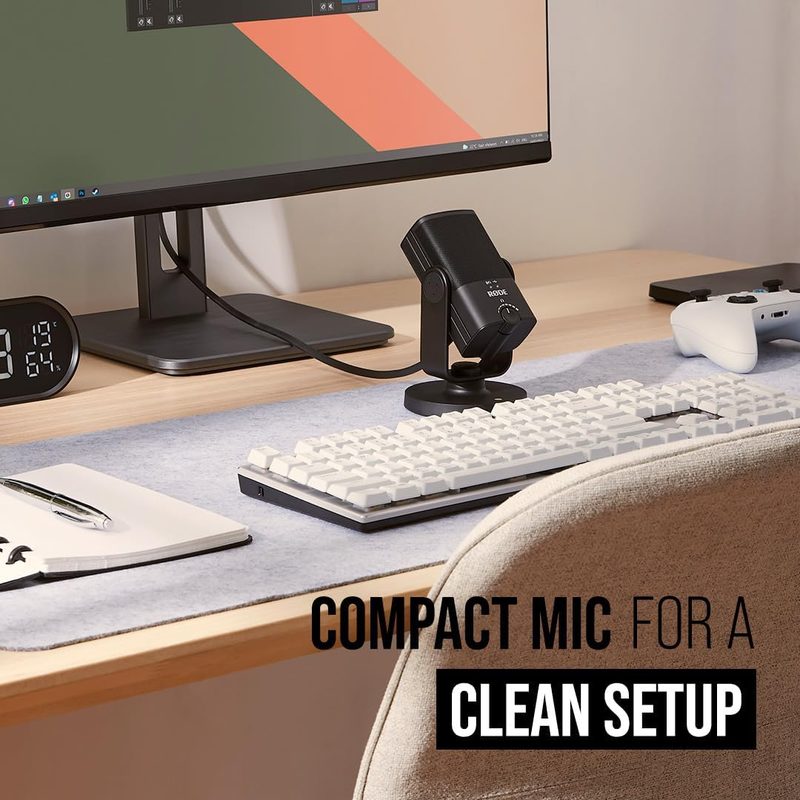
Rode’s NT-USB Mini is what happens when an Australian pro-audio company decides to build a $100 USB mic without cutting corners. The body is small enough to fit between a laptop and a coffee mug, but the capsule inside is tuned for the same broadcast-grade clarity that Rode’s $400+ mics deliver. For solo podcasters who care about how their voice sounds in headphones, this is the pick.
The magnetic detachable base is a touch that you don’t realize you needed until you have it. Pop the mic off the desk stand and snap it onto a boom arm in seconds — no screwing, no adapters. The built-in pop filter is genuinely effective at killing plosives, and the zero-latency headphone jack offers cleaner monitoring than most $200 mics. Audio quality is rich without being colored, suitable for both speaking and acoustic instrument capture.
Rode Connect software (free) unlocks the hidden APHEX Aural Exciter, Big Bottom, compressor, and noise gate processing — a suite of broadcast-grade DSP that would cost hundreds in plugin form. It pairs with up to four NT-USB Minis simultaneously for multi-host podcast setups, making this the most scalable budget USB mic on the market.
Pros
- Studio-quality Rode capsule under $100
- Magnetic detachable desk stand
- Effective built-in pop filter
- Free Rode Connect software with pro DSP
- Multi-mic podcast scaling (up to 4 units)
Cons
- Small footprint can feel unstable on uneven desks
- USB-C requires the included cable for stability
- Condenser pattern still picks up some room noise
- No physical gain knob (software only)
- Cardioid only — no polar pattern switching
4. HyperX QuadCast S — Best for Streaming ($130)
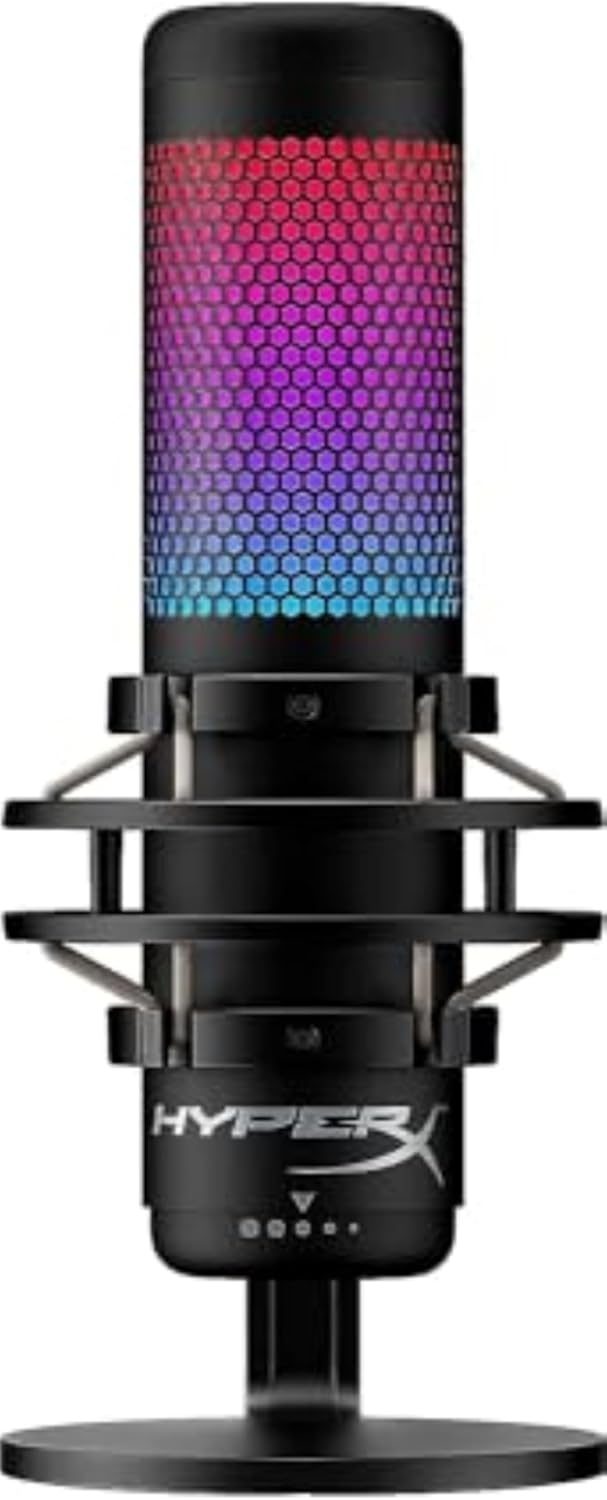
The HyperX QuadCast S is the mic Twitch streamers buy when they want a single product to handle gameplay commentary, podcast recording, and Discord calls without compromise. The full-spectrum RGB lighting is the obvious headline, but underneath the glow sits a genuinely capable condenser with four polar patterns — cardioid, omnidirectional, stereo, and bidirectional — the kind of versatility you typically pay $200+ to get.
The integrated anti-vibration shock mount eliminates desk thumps and keyboard transfer noise that plague streamers, while the tap-to-mute sensor on top is the most intuitive mute control on any USB mic. Tap it once and the LED cuts to red — no software fumbling mid-rant. The internal pop filter handles plosives well enough that you won’t need an external one for most streaming use cases.
Sound quality is broadcast-clean with a slight presence boost that flatters voice over background game audio. The QuadCast S won’t replace a Shure SM7B for music tracking, but for streaming and podcasting it sounds professional and the customizable RGB ties beautifully into the rest of a HyperX or wider PC ecosystem. At $130 it’s the best-equipped streaming mic under $150.
Pros
- Four selectable polar patterns at this price
- Customizable RGB lighting (Ngenuity software)
- Built-in shock mount and pop filter
- Tap-to-mute sensor with LED indicator
- USB-C connectivity
Cons
- RGB will be a turn-off for minimalist setups
- Ngenuity software has occasional Windows hiccups
- Stereo and bidirectional modes are situational
- Condenser still needs a quiet room
- Heavier than the NT-USB Mini
5. FIFINE K688 — Best Portable ($80)
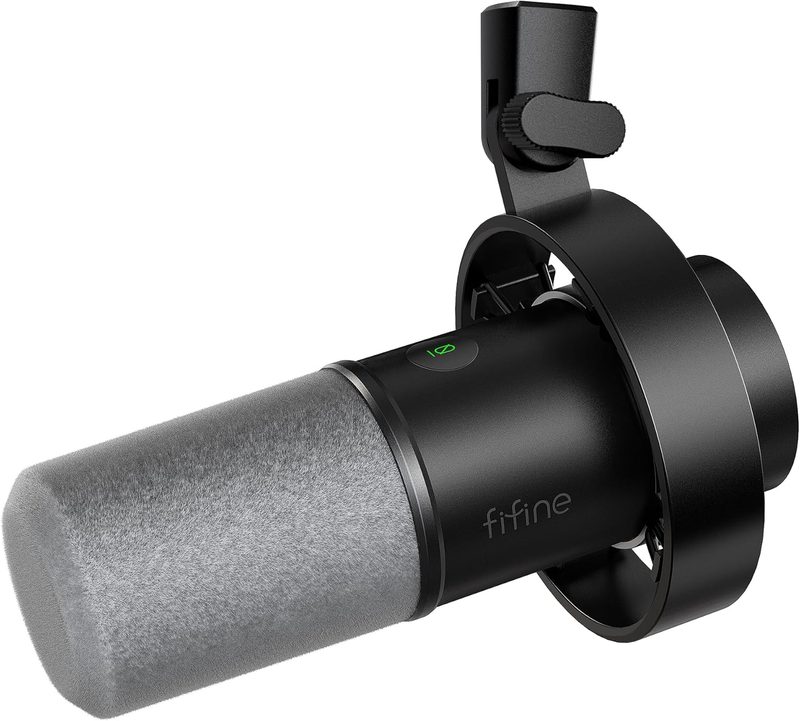
FIFINE has spent the last five years quietly building a reputation for making mics that look and sound like they cost twice their asking price, and the K688 is the brand’s best work. At $80 you get a dual USB/XLR dynamic mic with an all-metal body, an integrated mute button, real-time headphone monitoring, and a built-in shock mount — a feature set that mirrors the $400 Shure MV7 almost spec for spec.
The dynamic capsule rejects room noise as well as any mic at this price, which makes the K688 a true portable workhorse. Throw it in a backpack for travel recording, plug it into a laptop in a hotel room, and the cardioid pickup keeps HVAC and traffic out of your audio. The mute button is a heavy-duty physical switch — no software lag, no flickering LED to interpret — and the gain dial on the back lets you adjust input without diving into Windows settings.
The K688 handles 130dB SPL without distortion, meaning it can record loud podcast guests, gaming reactions, and even vocal sessions without clipping. It’s not as detailed as a condenser for music, but for spoken-word content on the move, this is the most feature-packed sub-$100 mic available in 2026.
Pros
- Dynamic capsule with excellent noise rejection
- Both USB-C and XLR outputs
- All-metal build with integrated shock mount
- Physical mute button and gain dial
- Handles up to 130dB SPL
Cons
- 16-bit USB audio (some competitors offer 24-bit)
- No companion software for processing
- USB cable is the only one included (no XLR)
- Bulkier than the NT-USB Mini for travel
- Less brand cachet than Shure or Rode
Side-by-Side Comparison
| Audio-Technica AT2020USB+ | Samson Q2U | Rode NT-USB Mini | HyperX QuadCast S | FIFINE K688 | |
|---|---|---|---|---|---|
| Price | $129 | $60 | $99 | $130 | $80 |
| Capsule Type | Condenser | Dynamic | Condenser | Condenser | Dynamic |
| Polar Patterns | Cardioid | Cardioid | Cardioid | 4 (Cardioid/Omni/Stereo/Bi) | Cardioid |
| Connection | USB-A | USB-A + XLR | USB-C | USB-C | USB-C + XLR |
| Headphone Jack | Yes (mix control) | Yes (on most bundles) | Yes (zero-latency) | Yes | Yes |
| Sample Rate | 48 kHz / 16-bit | 44.1/48 kHz / 16-bit | 48 kHz / 24-bit | 48 kHz / 16-bit | 48 kHz / 16-bit |
| Mute Button | No | No | No | Yes (tap sensor) | Yes (physical) |
| Built-in Shock Mount | No | No | No | Yes | Yes |
| Software DSP | No | No | Yes (Rode Connect) | Yes (Ngenuity RGB) | No |
| Best For | Studio-quality voice | All-purpose budget | Premium compact | Twitch streaming | Portable podcasting |
How to Choose a USB Microphone for Podcasting Under $150
Dynamic vs. Condenser: Which Type Should You Buy?
Dynamic mics (Samson Q2U, FIFINE K688) use a moving-coil capsule that requires close-up speaking and rejects almost all room noise. They’re forgiving in untreated rooms with computer fans, traffic, or pets in the background — the go-to for most home podcasters. Condenser mics (AT2020USB+, NT-USB Mini, QuadCast S) use a sensitive diaphragm that captures more detail and air in your voice but also picks up the room. If you record in a treated space or a quiet bedroom, condensers sound more “professional.” In a noisy environment, dynamic wins every time.
Polar Patterns Explained
The polar pattern is the shape of the area the mic listens to. Cardioid (all five picks support this) hears only what’s in front — ideal for solo podcasting. Omnidirectional hears everything around the mic, useful for round-table recordings with one mic. Bidirectional (figure-8) hears front and back, perfect for two-person interviews. Stereo captures left-right separation for music or ASMR. The HyperX QuadCast S is the only mic on this list with all four, making it the most versatile pick for varied content.
USB-A vs. USB-C: Does It Matter?
USB-A is older but universally compatible — every laptop and desktop has a port. USB-C is the modern standard, sometimes faster, and works natively with newer laptops, tablets, and even smartphones without dongles. If you plan to record on an iPad or Android device, prioritize USB-C (NT-USB Mini, QuadCast S, FIFINE K688). For desktop-only setups, USB-A is fine — the AT2020USB+ won’t be slower or worse for using it.
Headphone Monitoring Is Non-Negotiable
A headphone jack on the mic with zero-latency monitoring lets you hear yourself as you speak, in real time. Recording without it causes a strange speech-delay disorientation when you’re playing back the file later through software monitoring. All five mics on this list have headphone outputs — this is a baseline feature you should never skip when buying a podcasting USB mic.
Built-in Pop Filter and Shock Mount
Plosives (P, B, T sounds) cause loud thumps without a pop filter. Desk vibrations transfer up the mic stand without a shock mount. Mics with these built-in (HyperX QuadCast S, FIFINE K688, NT-USB Mini) save you $40-60 on accessories. For the AT2020USB+ and Samson Q2U, plan to budget an extra $20 for a foam windscreen or external pop filter.
Software DSP and Effects
Some USB mics ship with companion software that adds compressors, noise gates, EQ, and broadcast-style processing. Rode Connect (NT-USB Mini) is the most powerful free option here, with APHEX-licensed processors. HyperX Ngenuity handles RGB and basic gain. If you don’t want to learn audio editing software like Audacity or Reaper, a mic with built-in DSP shortcuts the learning curve enormously.
Frequently Asked Questions
Do I need an audio interface, or is USB good enough for podcasting?
USB is more than good enough for podcasting in 2026. Modern USB mics like the AT2020USB+ and Rode NT-USB Mini have internal A/D converters that match dedicated interfaces in audio quality up to about $200. You’d only need a separate interface if you want to record multiple mics simultaneously, use phantom-powered XLR mics, or run heavy real-time effects. For solo or remote-recorded podcasts, USB is simpler and sounds identical to most listeners.
Will any of these mics work with my iPad or smartphone?
The USB-C mics on this list (Rode NT-USB Mini, HyperX QuadCast S, FIFINE K688) work natively with USB-C iPads, Android phones, and modern Macs. For Lightning iPads or iPhones, you’ll need a Lightning-to-USB camera adapter. USB-A mics (AT2020USB+, Samson Q2U) need a USB-A-to-USB-C adapter or hub to connect to USB-C devices. Mobile recording apps like Ferrite, GarageBand, and Riverside all support external USB mics.
Why is dynamic considered better than condenser for podcasting?
Dynamic mics like the Samson Q2U and FIFINE K688 require close-up speaking, which means they pick up your voice loudly while rejecting almost everything else in the room. In untreated home studios — where most podcasters record — this is enormously valuable. You can have a fan running, a dog barking three rooms away, and a noisy keyboard, and the dynamic mic will mostly ignore them. Condensers are more detailed for music and treated studios but penalize you in untreated rooms.
What’s the difference between $80 and $130 USB podcasting mics?
At $80 (FIFINE K688), you get a complete feature set — dual USB/XLR, mute button, monitoring — with slightly less-refined sound. At $130 (AT2020USB+, QuadCast S), you get capsules tuned by mature audio brands with better detail, broader frequency response, and more accurate vocal reproduction. For pure spoken-word podcasting, the $80 mics are 90% as good as the $130 mics. The premium gets you cleaner music recording, more polar pattern options, and brand-name longevity.
How long do USB microphones last?
Quality USB mics typically last 8-15 years of regular use. The capsule and electronics are essentially solid-state with no moving parts that wear out. The most common failure points are USB cables (replaceable) and the USB connector on the mic body (rare but possible). Dynamic mics like the Samson Q2U and FIFINE K688 are particularly durable because of their handheld broadcast heritage — they’re built to survive being dropped. Expect your USB mic to outlast the laptop you bought it for.
The Verdict: Which USB Microphone Should You Buy?
For most podcasters, the Audio-Technica AT2020USB+ is the best USB microphone under $150. At $129 it pairs the legendary AT2020 condenser capsule with USB convenience, zero-latency monitoring, and the kind of build quality that keeps people using the same mic for a decade. If you have a reasonably quiet recording space, this is the safest pick.
Choose the Samson Q2U if you record in a noisy room and want the cheapest entry into broadcast-quality dynamic sound. Go with the Rode NT-USB Mini if you want premium Rode audio plus free DSP processing through Rode Connect. The HyperX QuadCast S is the streamer’s pick with four polar patterns and RGB. And the FIFINE K688 packs the most features per dollar for podcasters on the move.